How to Wear Sheer
Four seasons in, transparency has stopped being a provocation and started being a fabric like any other. Here is how to buy it and wear it.

Images courtesy of Vogue Runway. All rights reserved.
Why sheer is still here
Transparency arrived as a statement and stayed as a material. What began on the runway as a deliberate exposure has been absorbed into the ordinary vocabulary of a wardrobe: a chiffon shirt under a blazer, an organza skirt over trousers, a mesh top worn with a coat and flat shoes. The shock has worn off, and what is left is a fabric with particular behavior.
Five ways to wear it
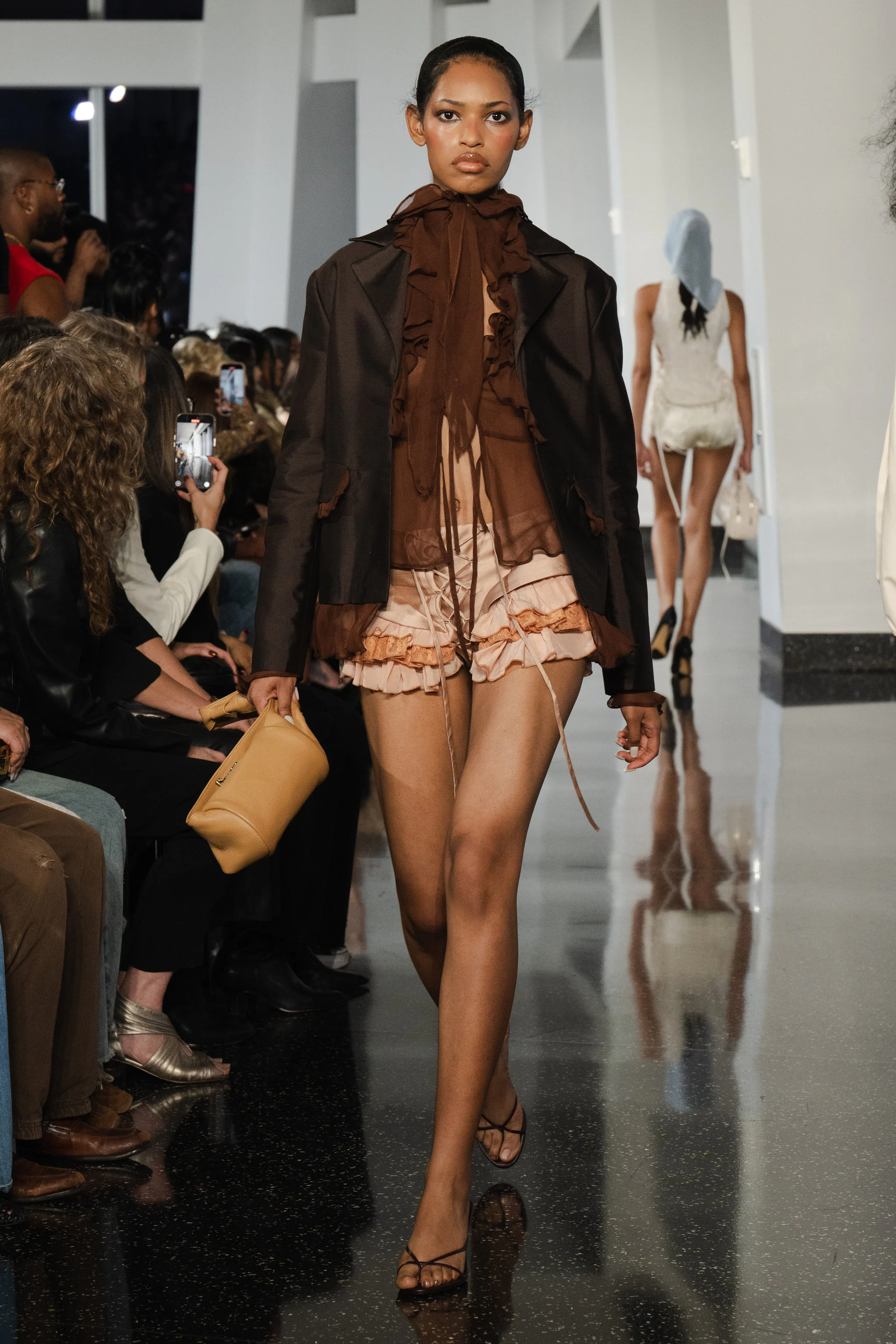
Image © Kim Shui. All rights reserved.
Under tailoring, daytime
A chiffon shirt inside a single-breasted jacket is the least demanding way to wear sheer, because the jacket does the covering and the fabric only shows at the collar, cuff and hem. Keep the shirt tucked and the trousers opaque, and it reads as texture rather than transparency.Create the look


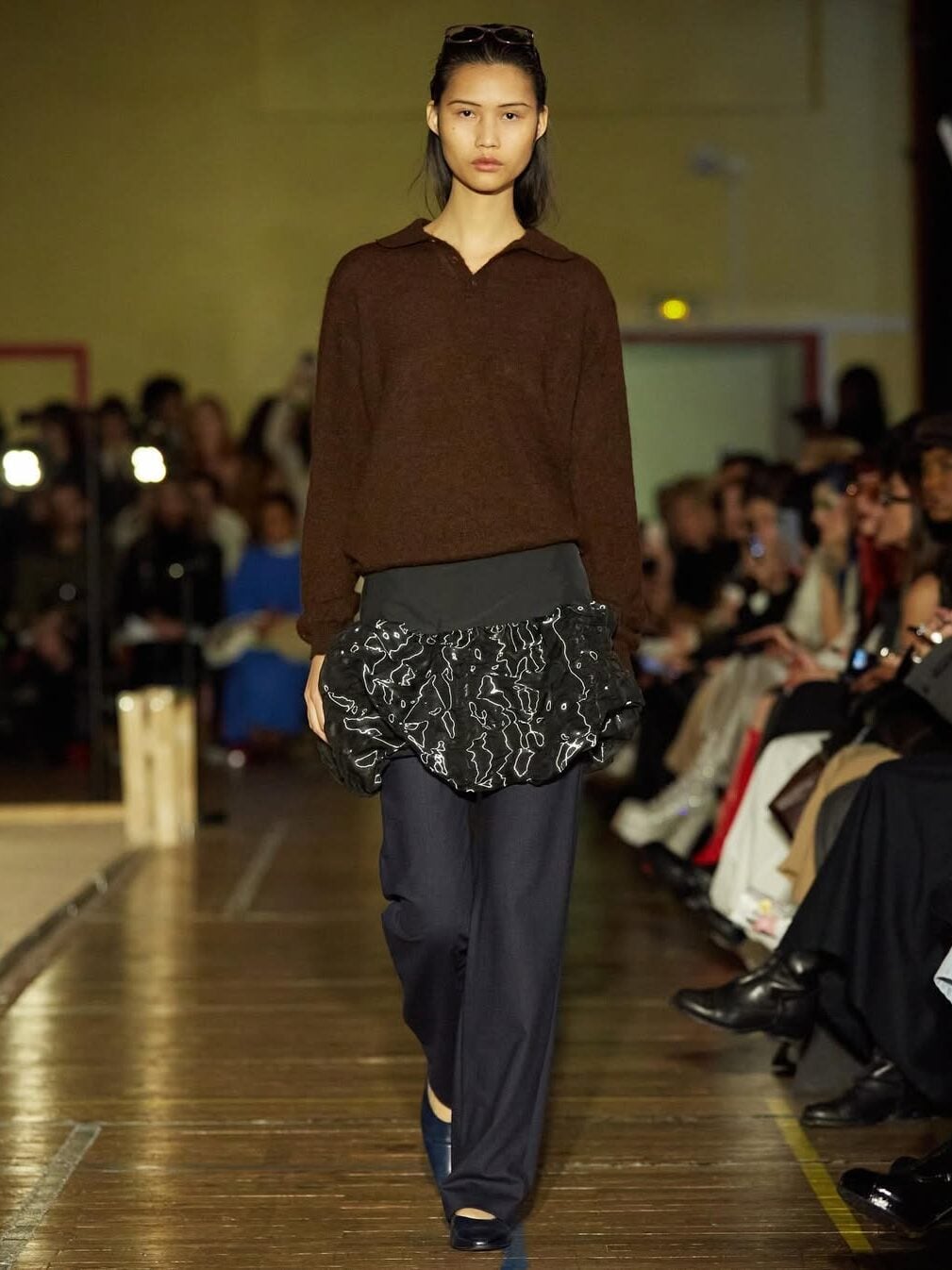
Image courtesy of Harper's Bazaar Australia. All rights reserved.
Over trousers, layered
An organza skirt worn over straight trousers gives you the movement of a skirt with none of the exposure. The rule is contrast in weight: the heavier the trouser, the better the skirt behaves. Match the hems within an inch of each other or let the skirt run longer.Create the look


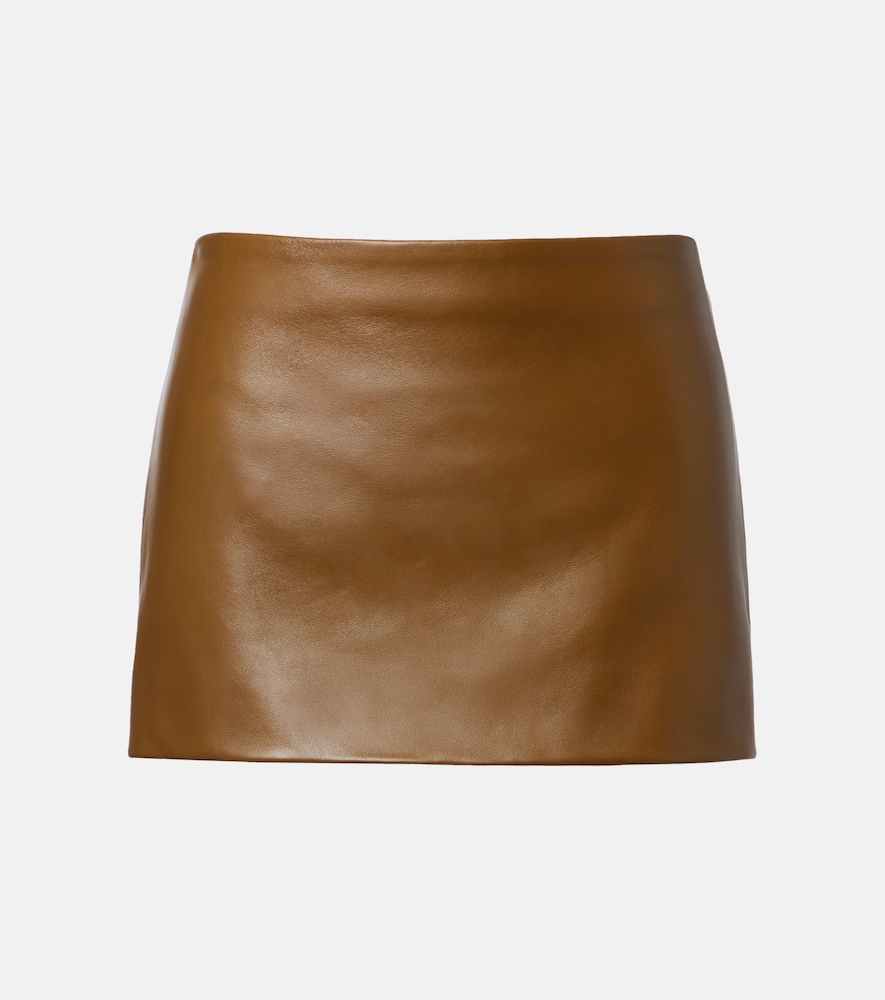
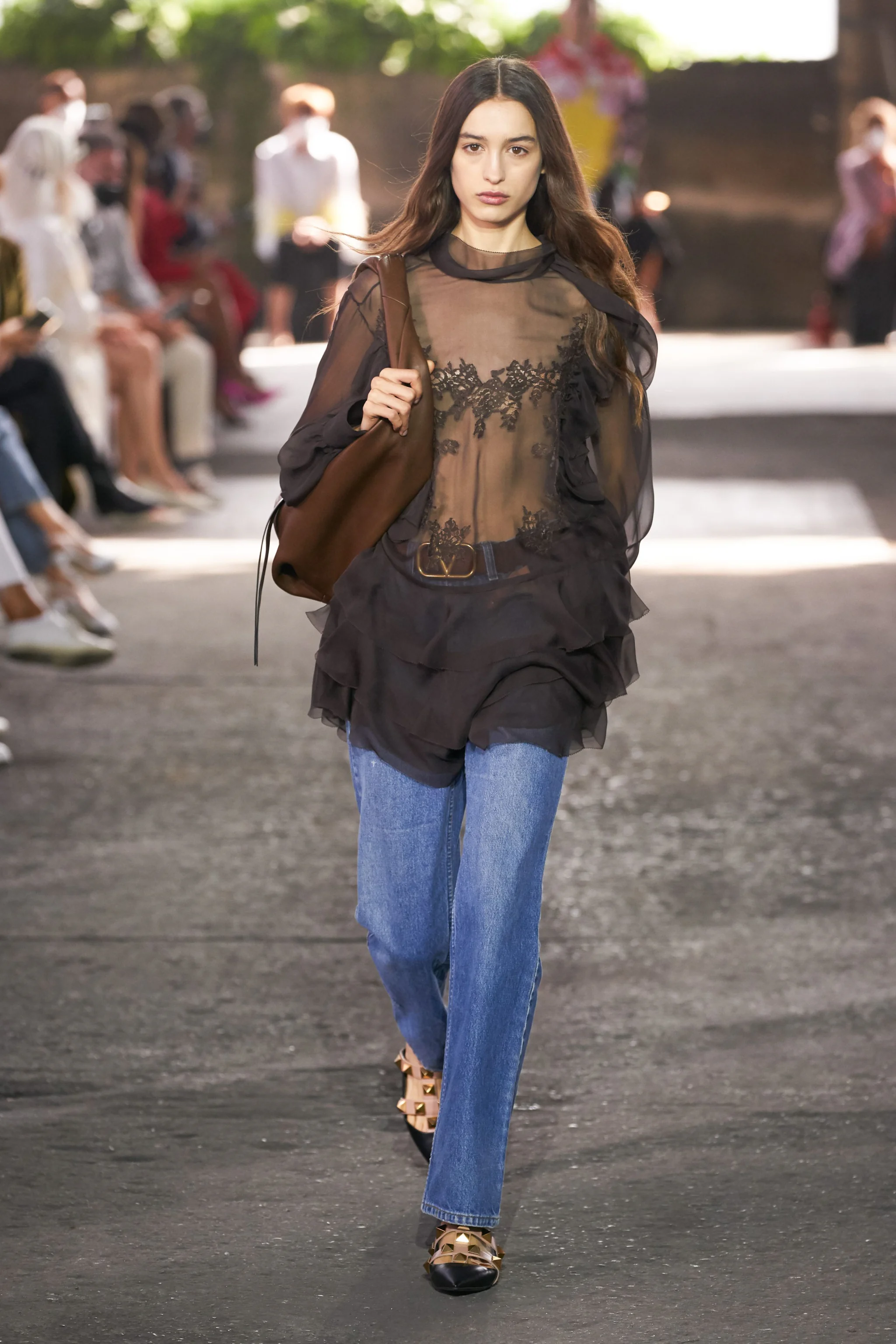
Image © Valentino. All rights reserved.
Mesh with denim
The most useful sheer piece most people own is a plain mesh long-sleeve, and it works because it takes the formality out of everything it meets. Worn with straight indigo denim and a flat shoe, it is a daytime outfit. Worn with a slip beneath and a heel, it is not.Create the look
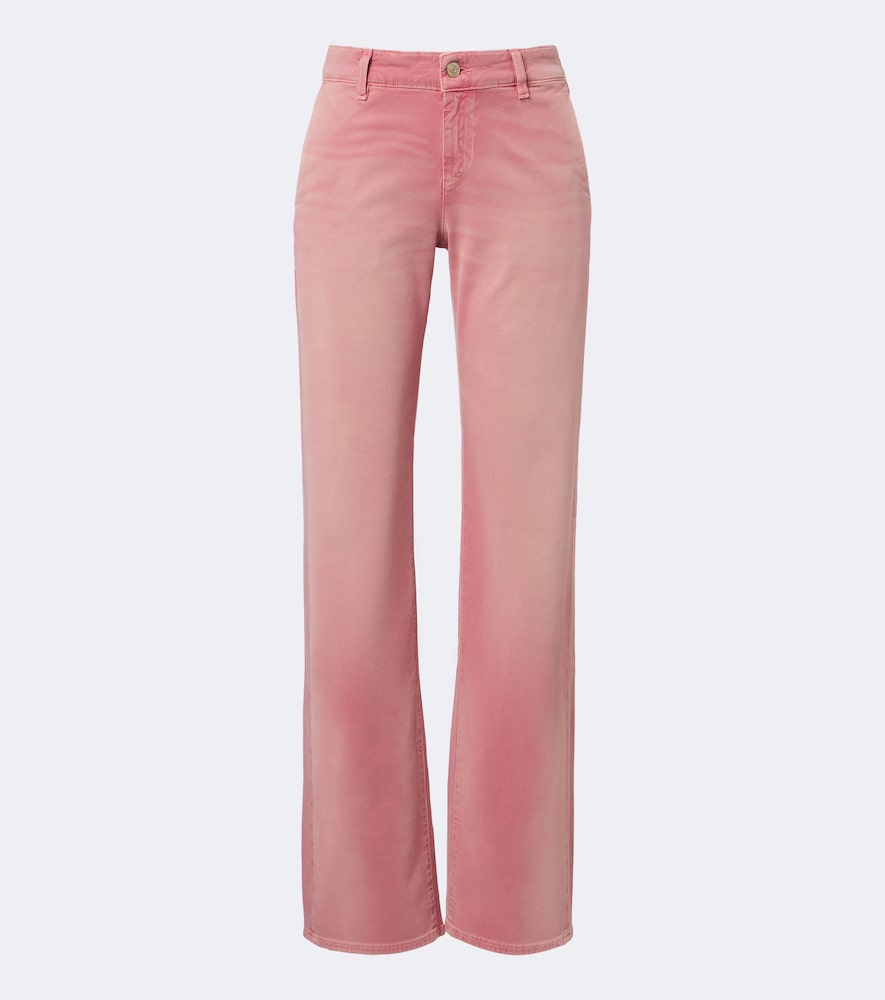

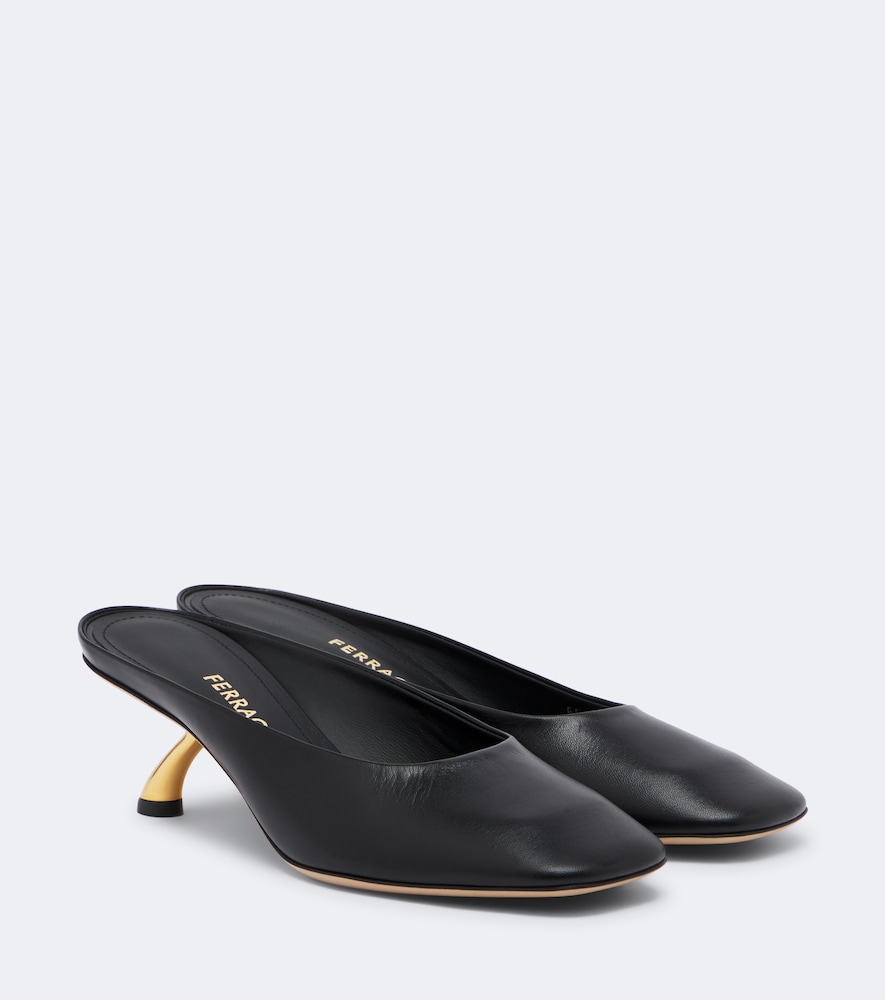
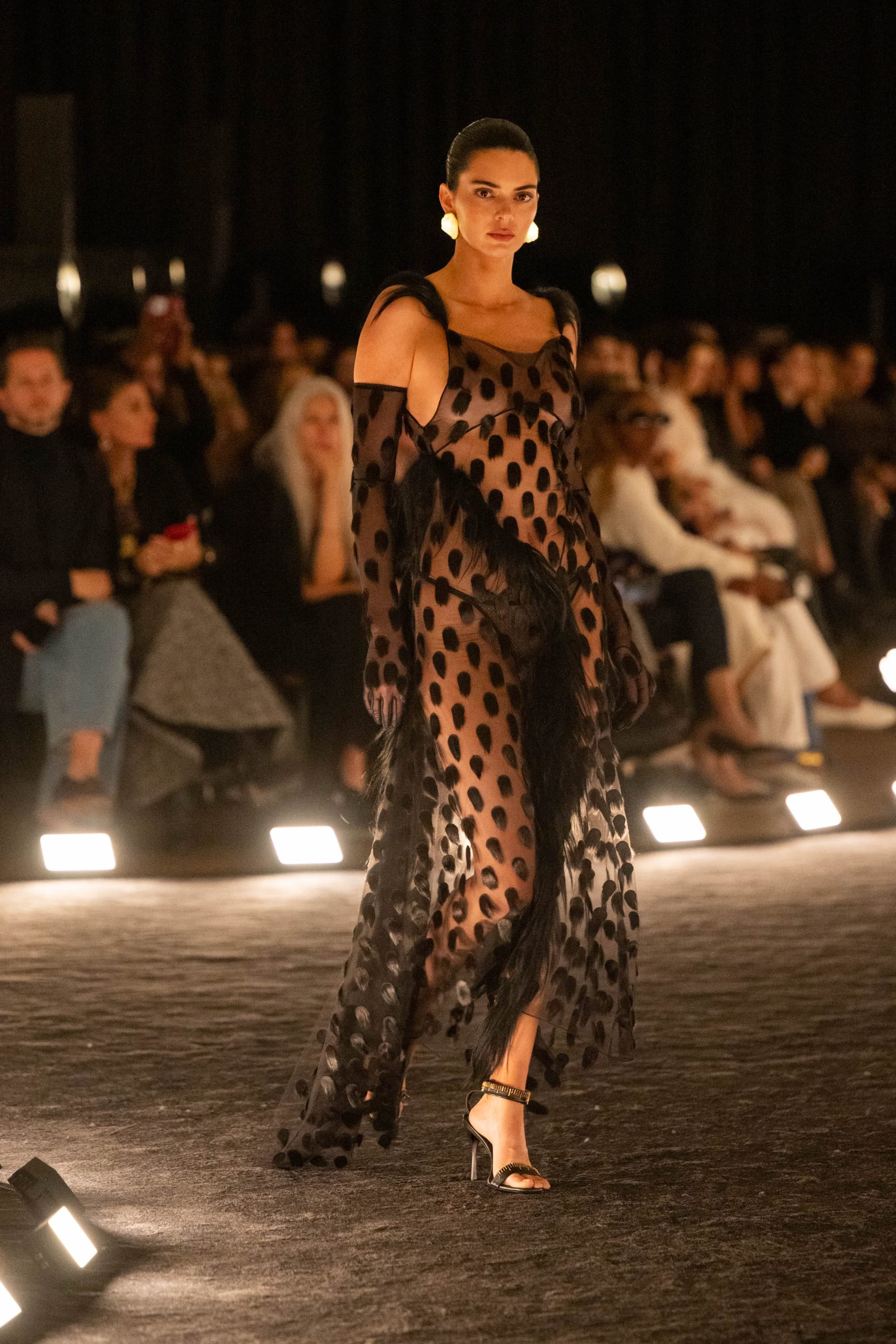
Image © Schiaparelli. All rights reserved.
The full sheer dress, anchored
A sheer dress needs one heavy element to hold it down: a coat, a boot, a structured bag. Choose the anchor before the dress. Without it the outfit floats, and floating is what makes sheer look like a costume rather than clothing.Create the look


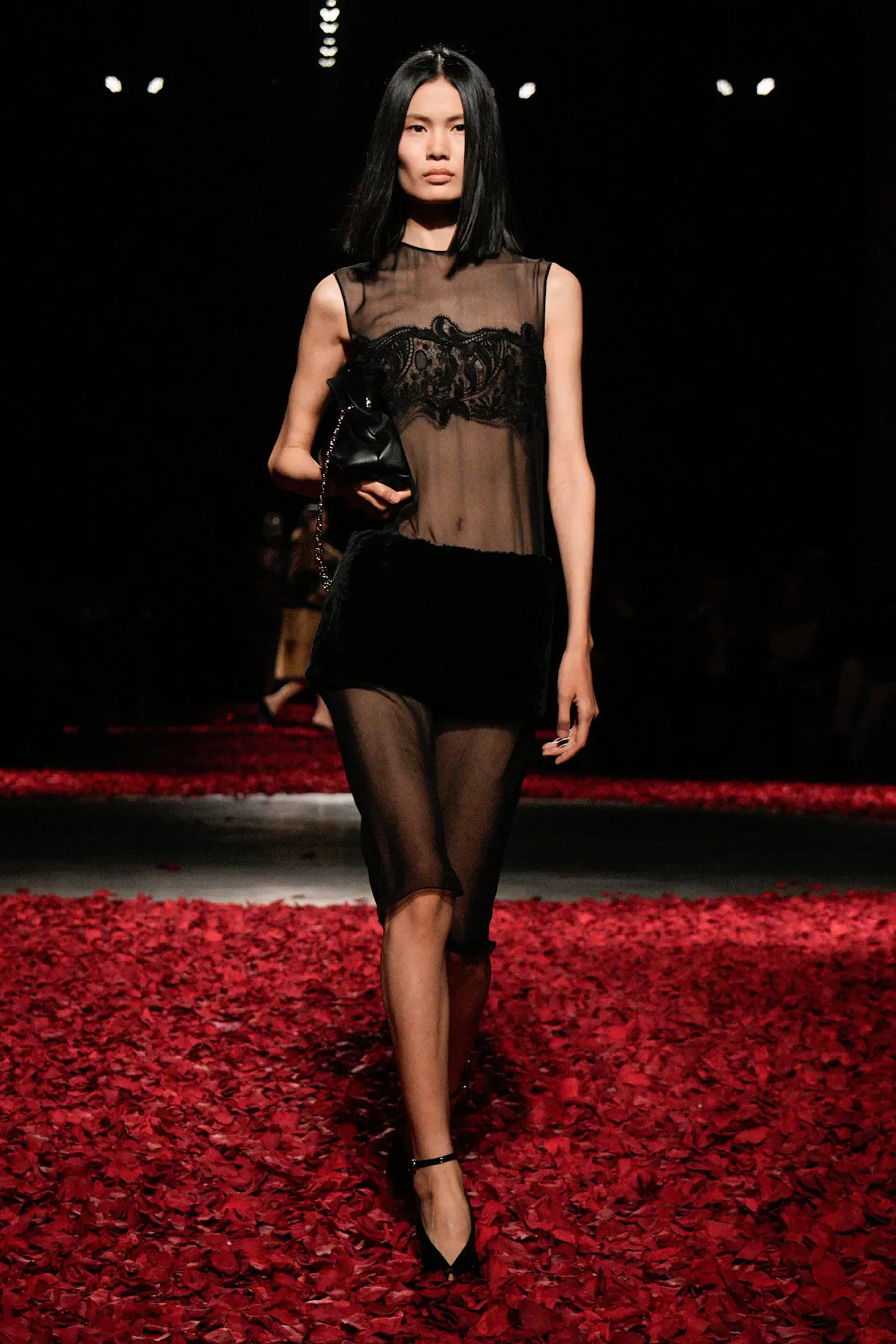
Image courtesy of Who What Wear. All rights reserved.
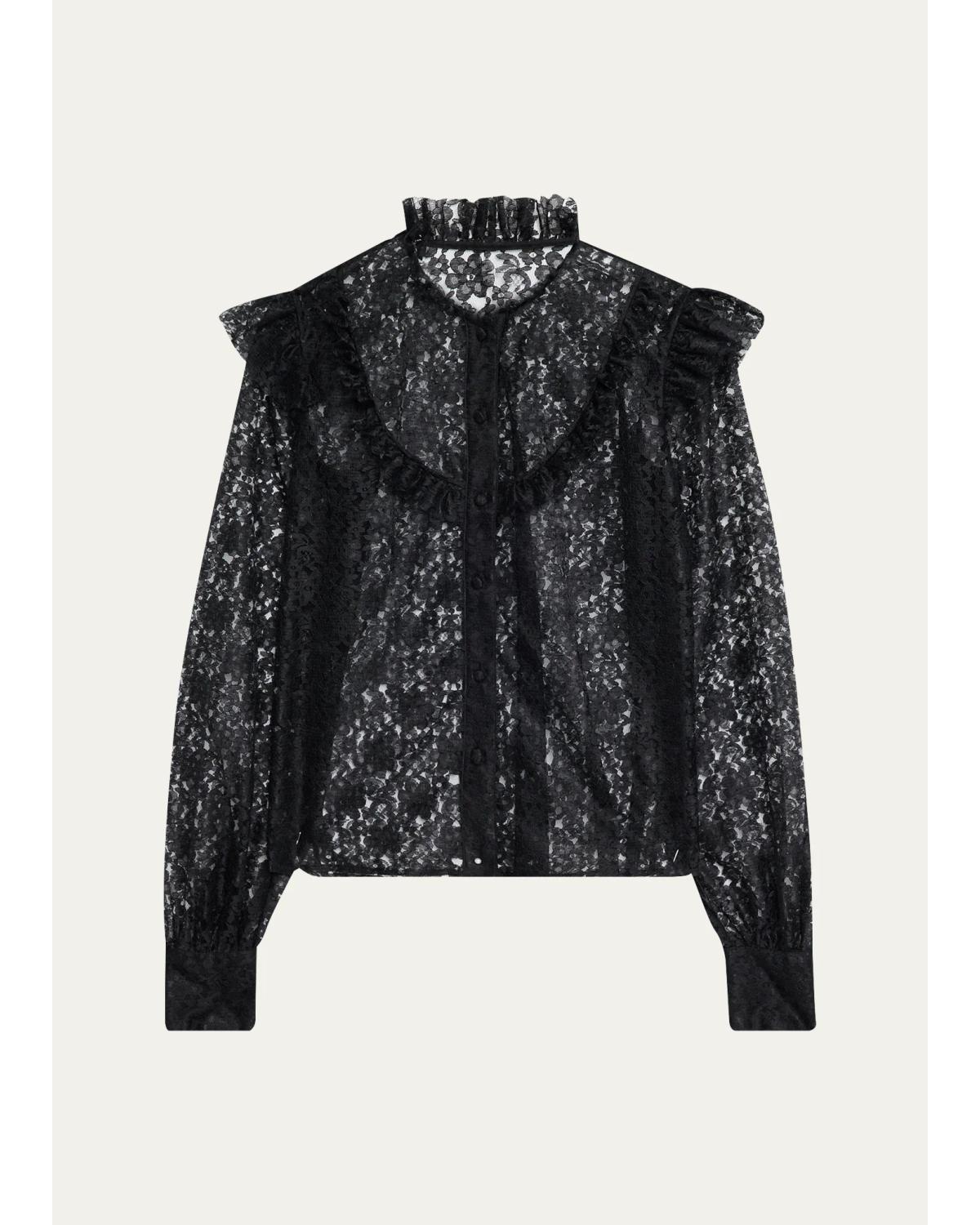
Lace in daylight
Lace is the hardest of the sheers to wear before evening, and the way through it is plainness everywhere else. Flat shoes, no jewelry, one color. Black lace with gray flannel is the most reliable version of this, and it holds day to night.Create the look
What to wear underneath
- A matched slip. Cut to the same length or one inch shorter, in the closest tone to the outer fabric. This is the default and it is almost always right.
- A bodysuit. For anything with a defined waist, because it removes the horizontal line a hem would create through the fabric.
- Deliberate contrast. A darker slip under a pale sheer reads as designed rather than accidental, but only if the edges are visible on purpose.
- Nothing, with a coat. Viable for evening and only when the outer layer never comes off. Decide that before you leave.
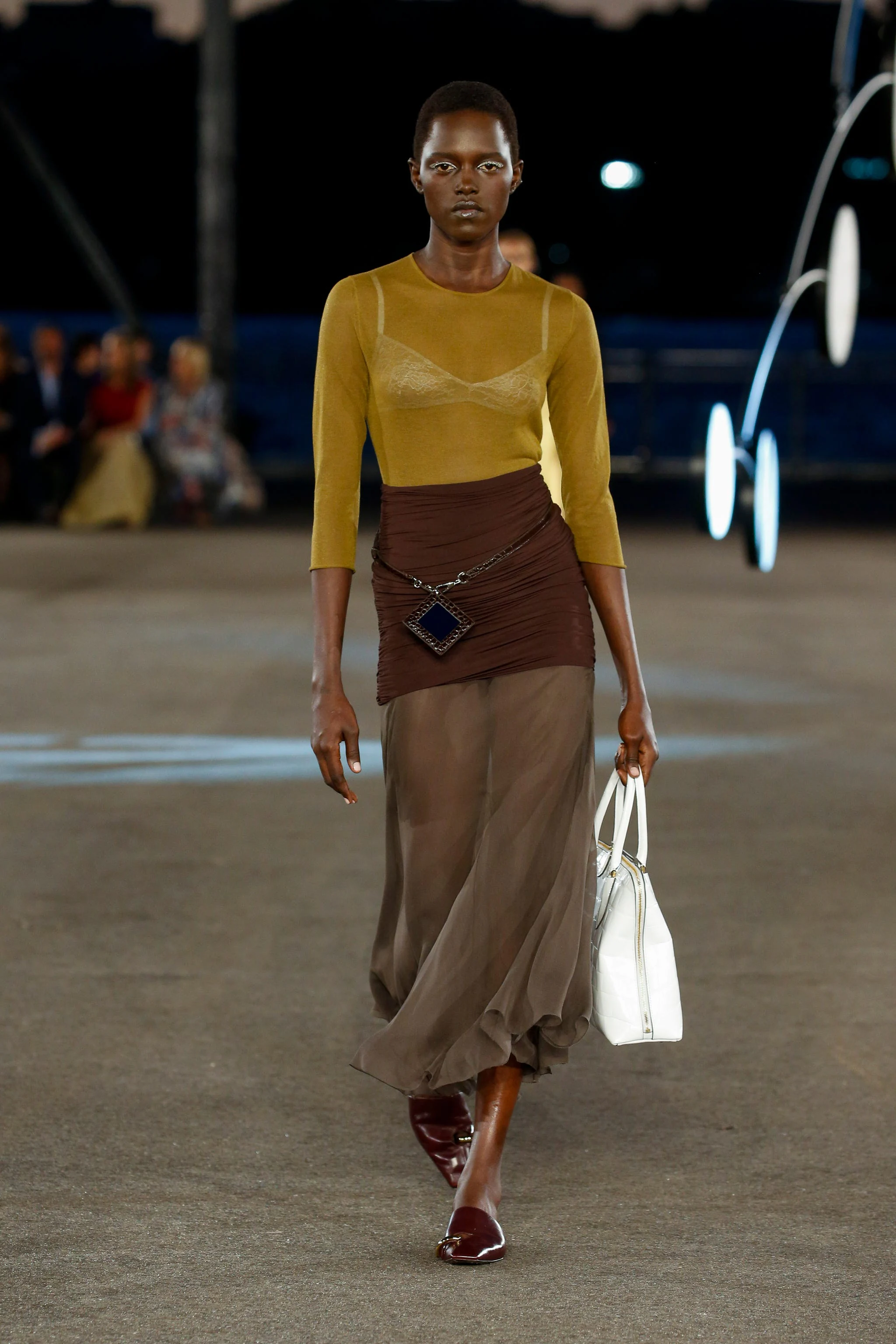
Image © Tory Burch. All rights reserved.
The fabrics, and what each one actually does
Sheer is a category, not a material. These six behave differently on the body, and the difference decides where you can wear them.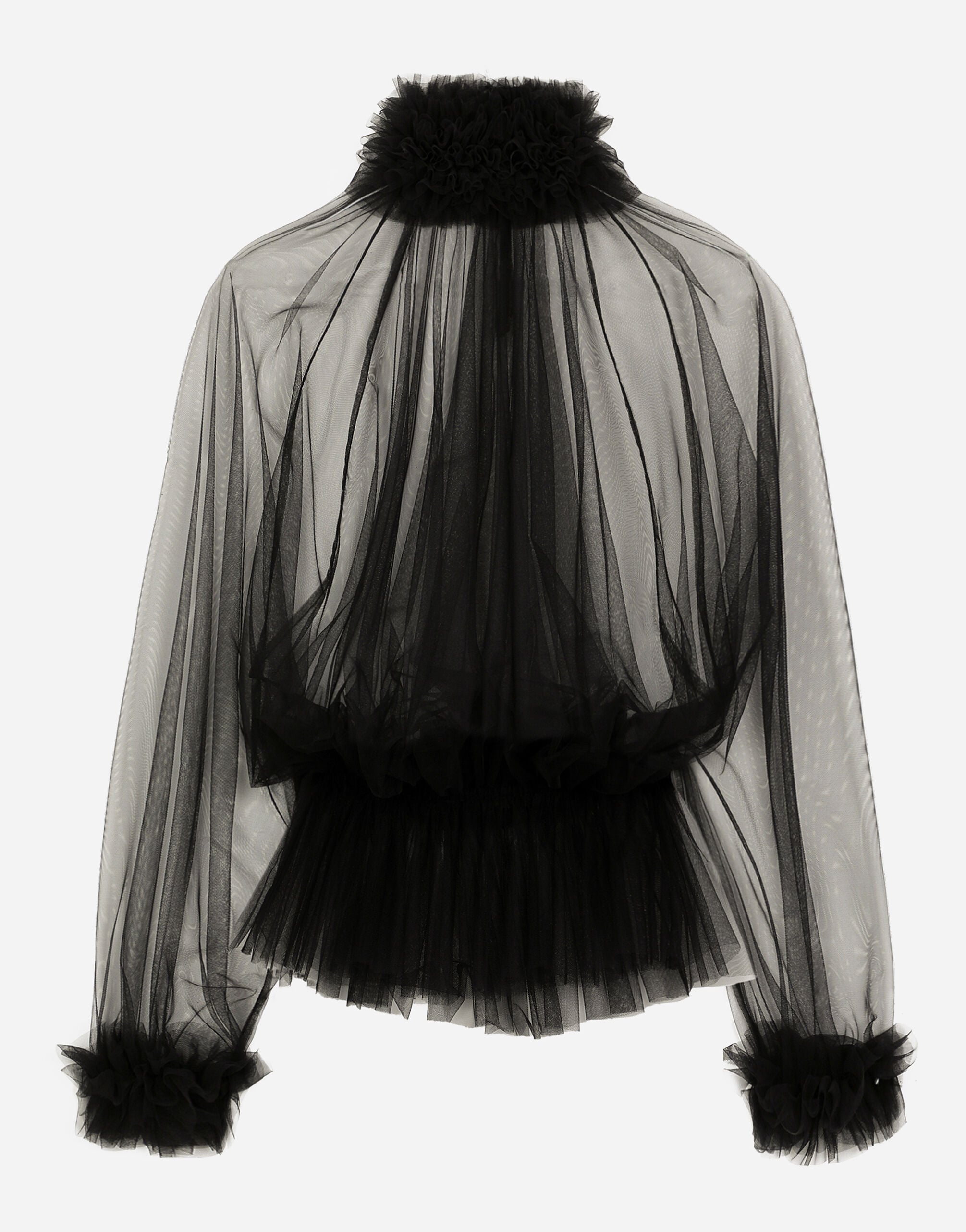
Chiffon
Behavior Light, fluid, follows the body. Creases quickly and shows a seam.Wear it when Daytime layering, warm weather, under tailoring.
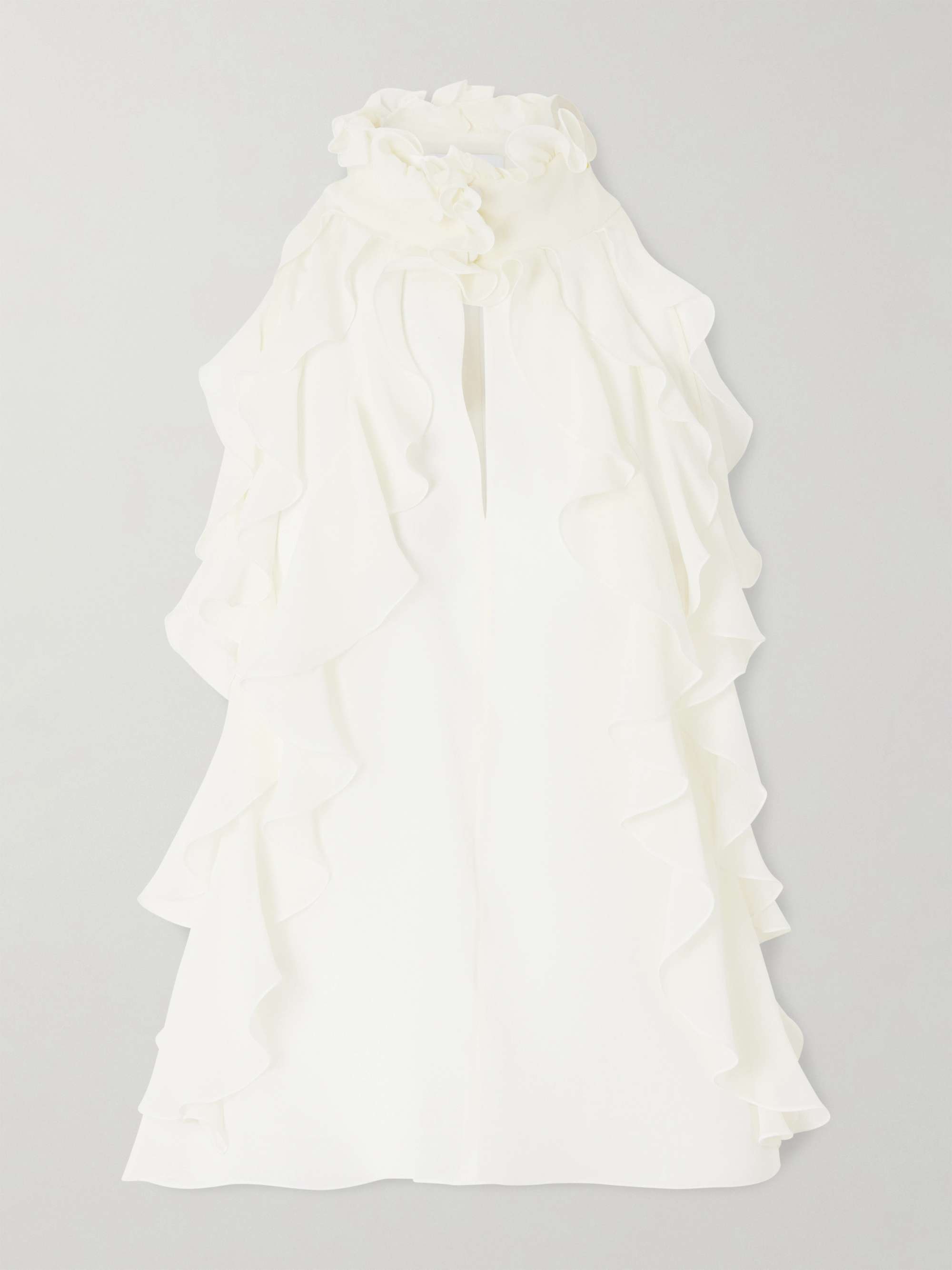
Georgette
Behavior Heavier in the hand, with a matte grain. Hangs rather than floats.Wear it when Column dresses, anything you need to travel in.
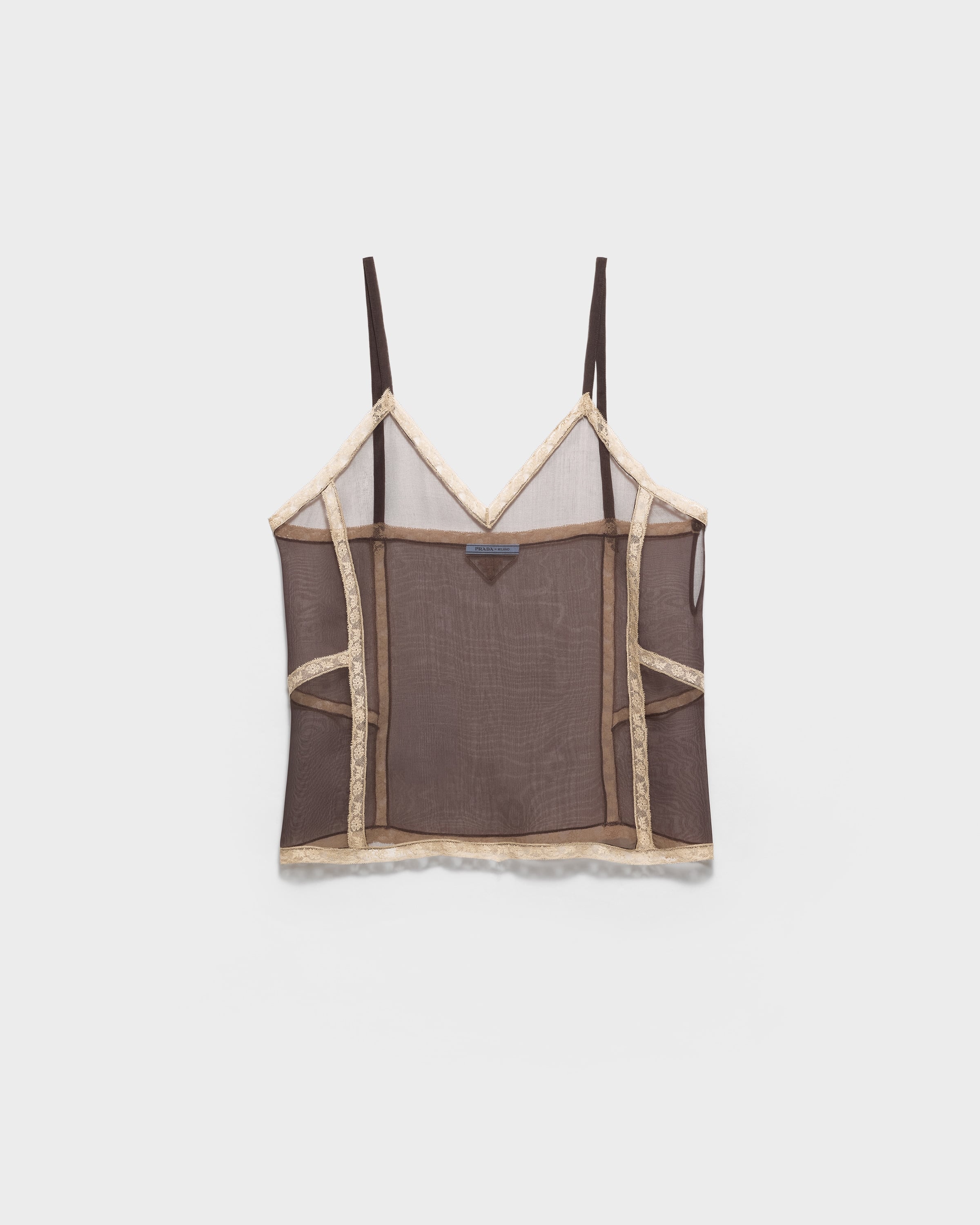
Organza
Behavior Holds its own shape. Stands away from the body and keeps volume.Wear it when Over trousers, structured skirts, occasion dressing.
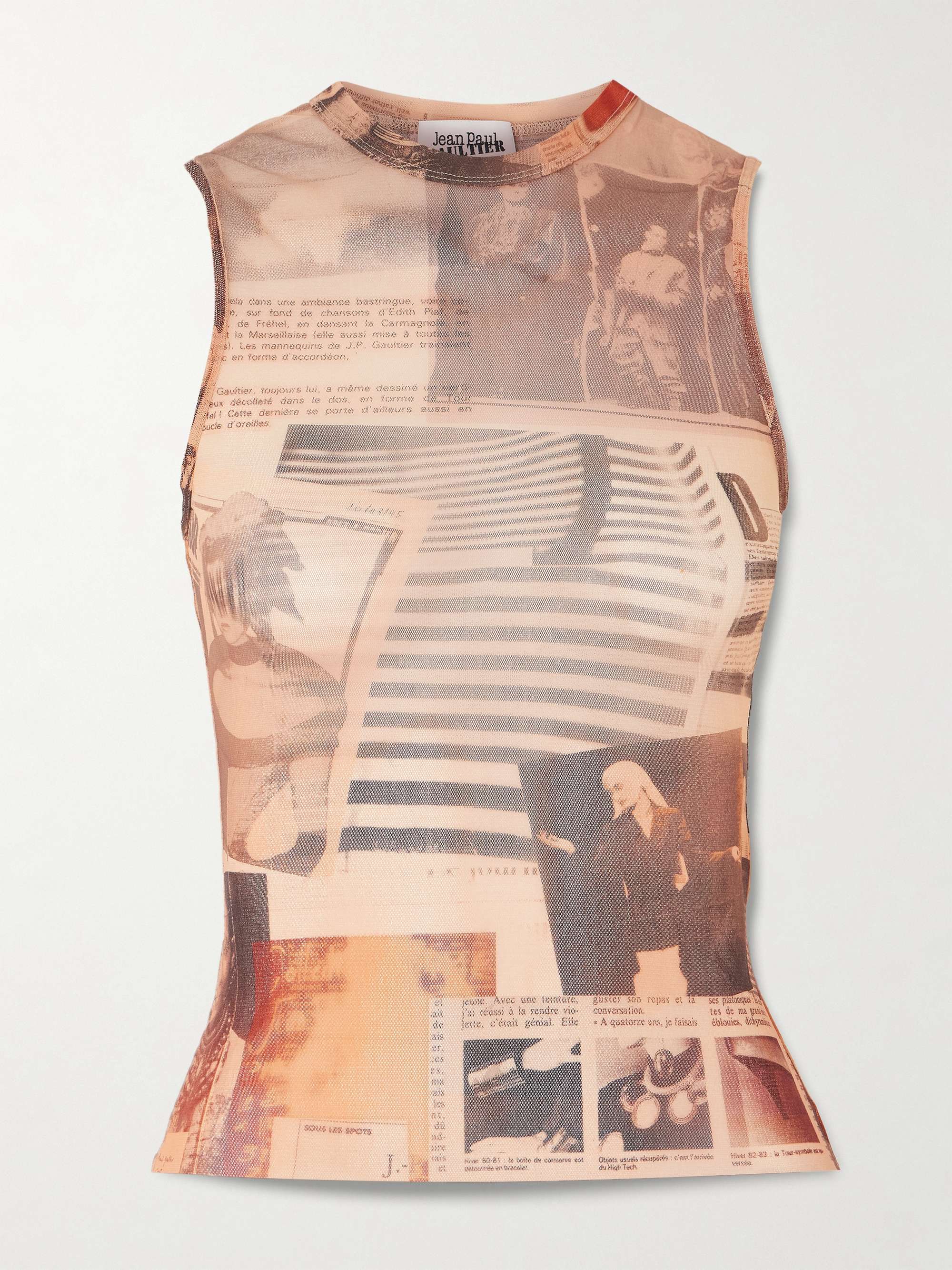
Mesh
Behavior Stretches and clings. Reads as a second skin rather than a layer.Wear it when With denim by day, under a jacket at night.
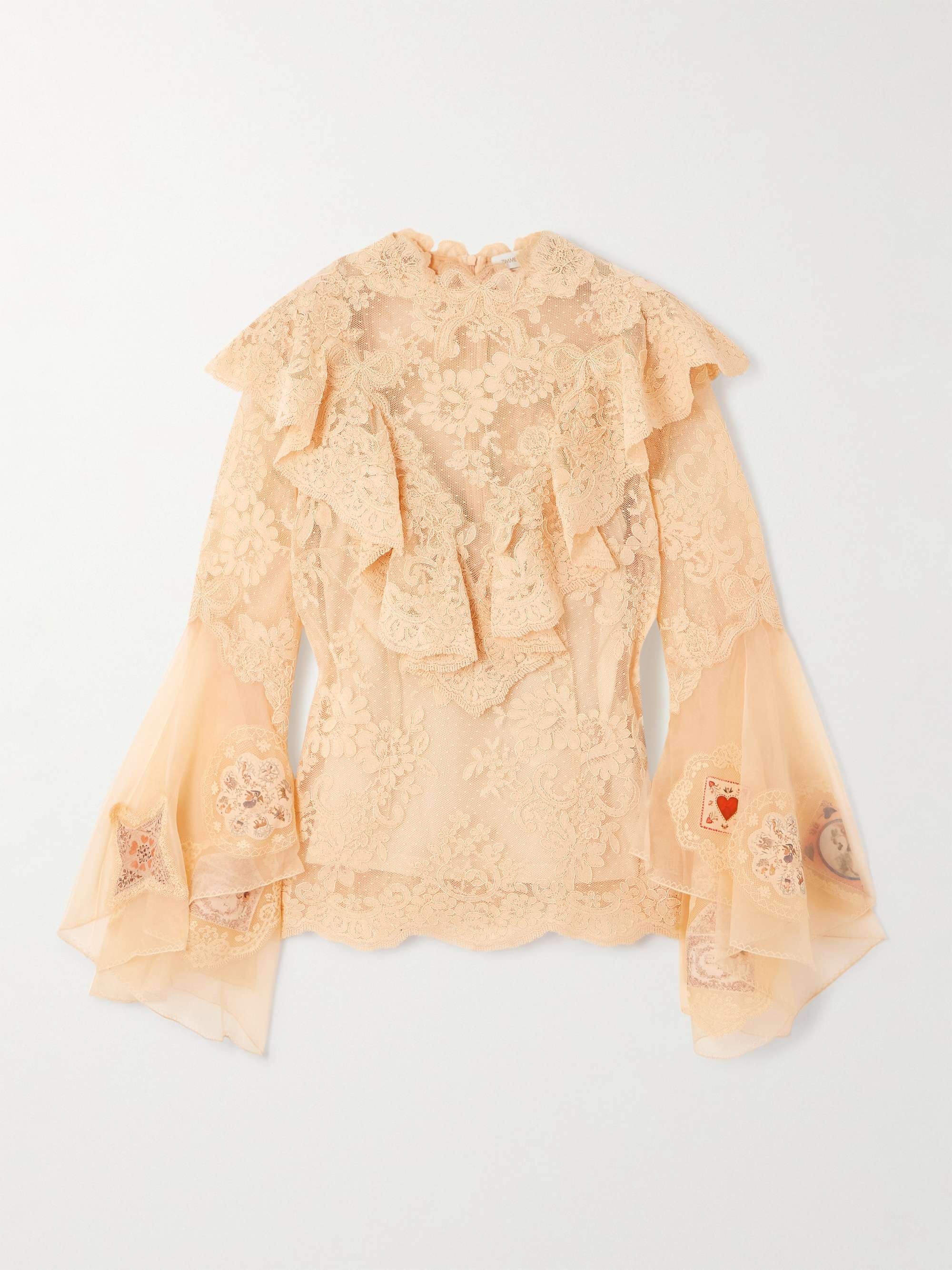
Lace
Behavior Pattern first, transparency second. The motif carries the outfit.Wear it when Evening, or daytime with everything else plain.
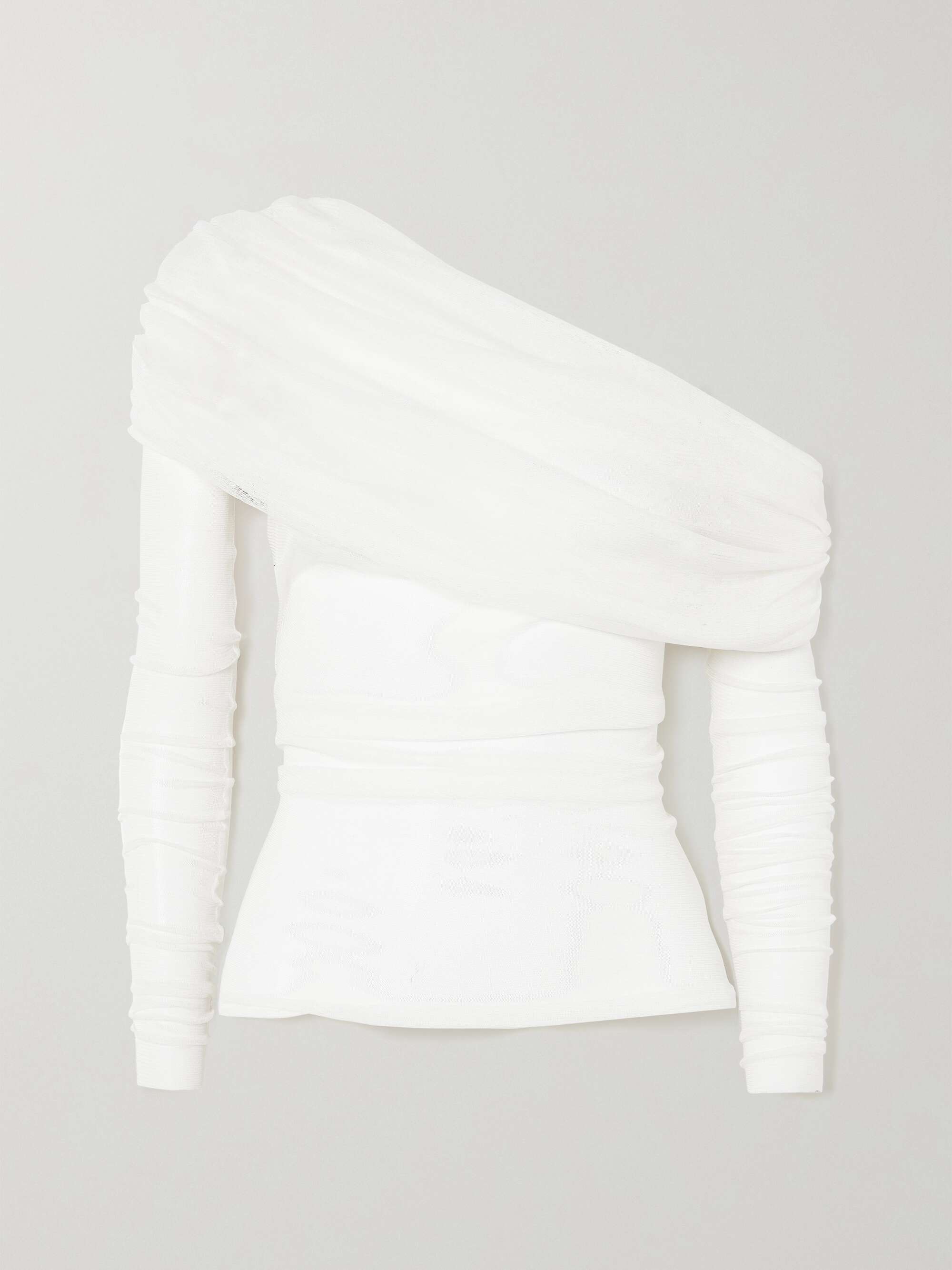
Tulle
Behavior Matte and open-weave. Layers on itself to build opacity gradually.Wear it when Skirts and sleeves, when volume is the point.
Five things to check before you buy
Weave density
Hold it against your hand. You want an even field, not a patchy one.Seam finish
French seams or bound edges. A raw overlocked seam shows through and will not improve.Hem weight
A weighted or rolled hem keeps the line. An unweighted hem lifts and clings.Care label
Dry clean only on a piece you intend to wear weekly is a cost, not a detail.The price spread
Sheer pieces are seasonal and go into markdown fast. Check every boutique holding the piece before you commit.Explore available sheer pieces and their current boutique offers.
Frequently asked
Can you wear sheer to the office?
Yes, in one place at a time and with a layer beneath. A chiffon shirt under a jacket, or a sheer sleeve on an otherwise opaque dress, is the version that works. A full sheer skirt or an unlined mesh top is not.
What colour slip should I buy?
Match the outer fabric rather than your skin. A black slip under black chiffon disappears; a nude slip under black chiffon reads as underwear. If you want the layer to be visible, make it obviously darker or obviously brighter.
Is sheer only a summer fabric?
No. It works better in winter than most people expect, because a coat provides the weight the fabric needs. Sheer under knitwear and sheer under wool tailoring are both cold-weather propositions.
How do I stop sheer fabric clinging?
Weight at the hem and a smooth layer underneath. Silk slips cling less than synthetic ones, and a weighted or rolled hem keeps the fabric falling rather than travelling.
Why does the same sheer piece cost different amounts at different boutiques?
Boutiques buy in different markets, price in different currencies and enter markdown on their own schedule. Seasonal categories like sheer move into markdown quickly, which widens the spread. We match on identity so the list you see is one exact piece.
We may earn a commission from partner links.