Amiri
The distressed denim made the name. The tailoring is what the house is actually building now. A guide to Amiri as it exists now, not as it existed a decade ago.
Founded 2014Los Angeles, California
Shop all Amiri →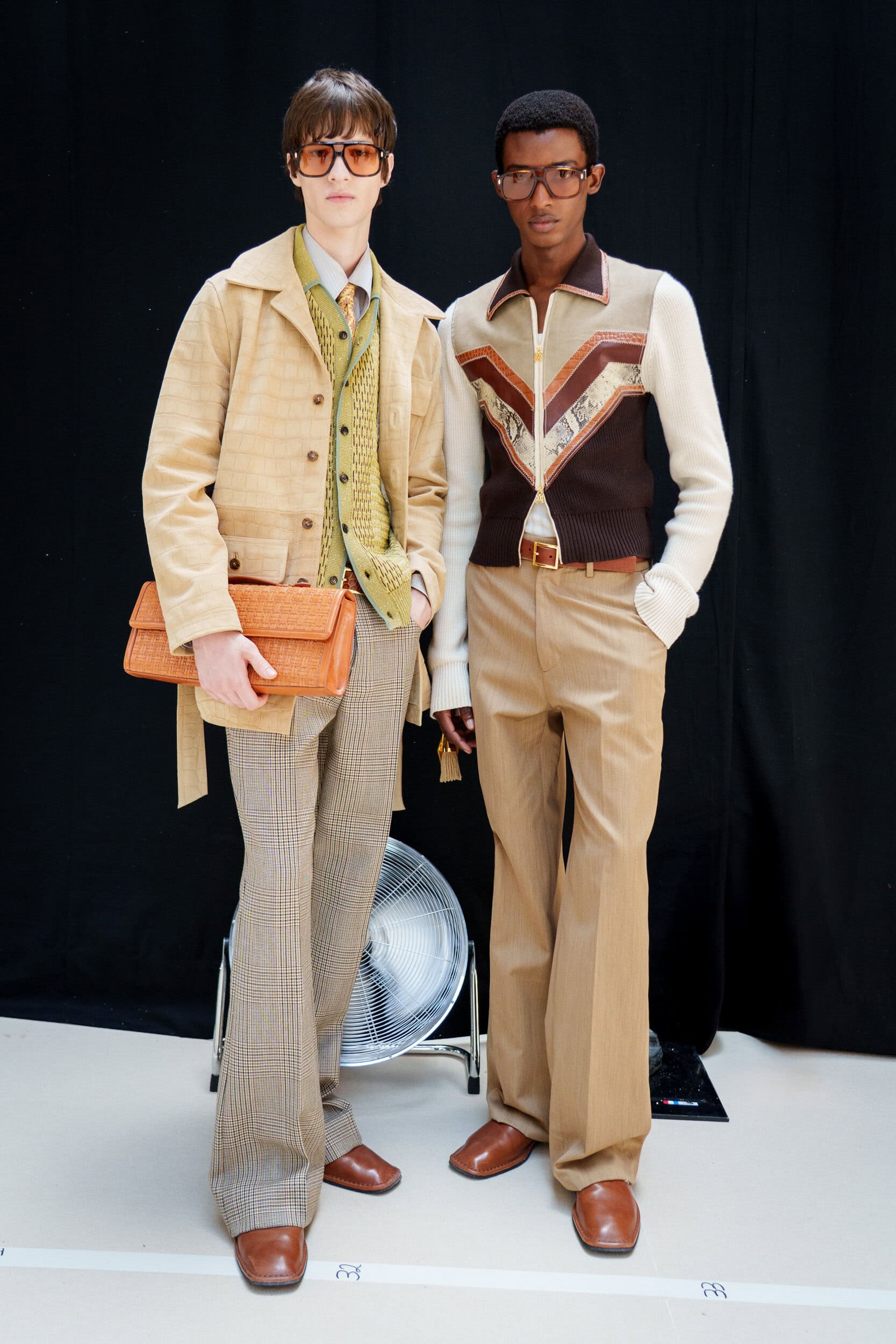
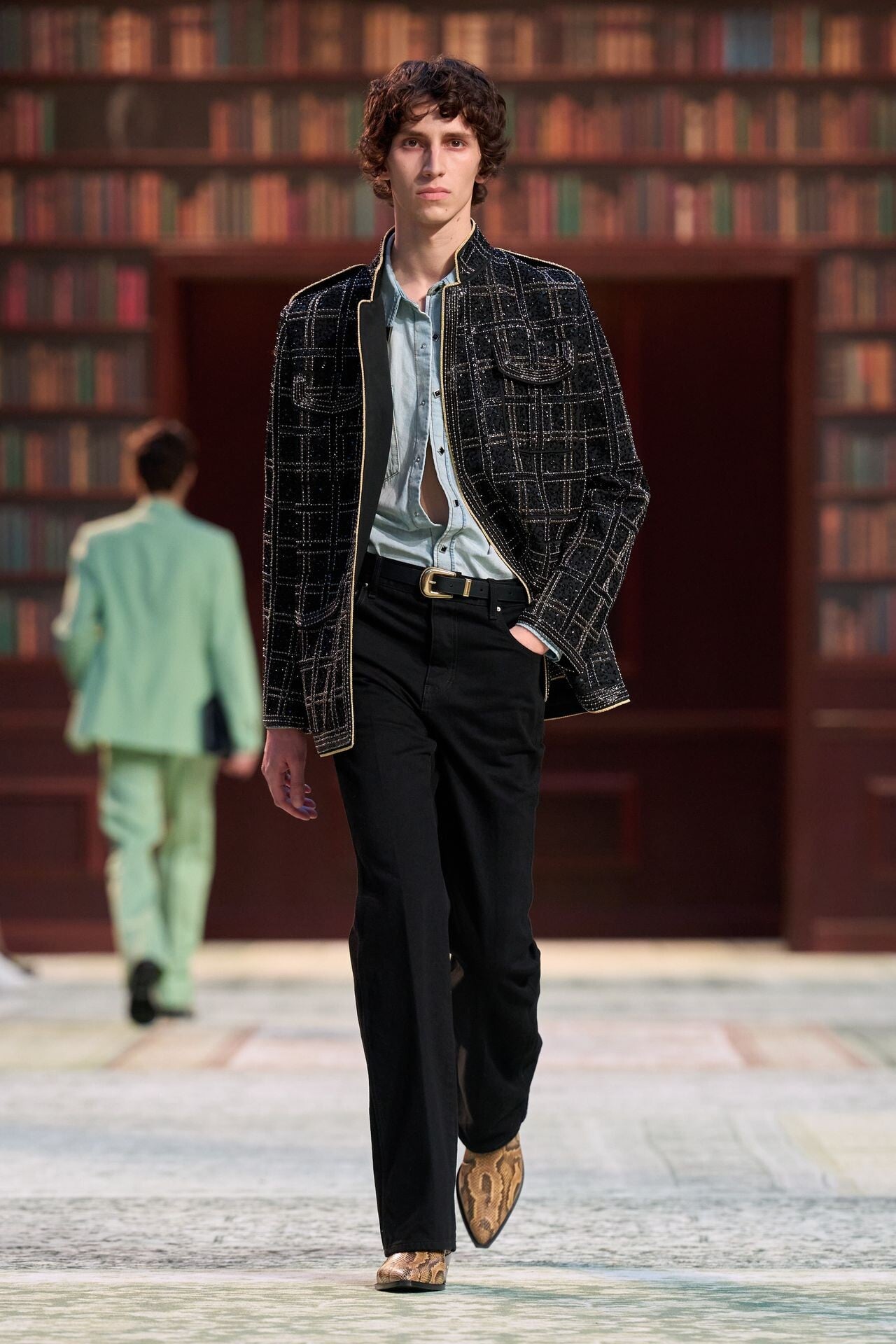
Amiri is a Los Angeles luxury house founded in 2014 by Mike Amiri, who remains its creative director and chief executive. It built its reputation on hand-distressed denim and Californian rock imagery, and it has spent the last several seasons deliberately moving past both, toward tailoring, leather goods and fine jewelry. It shows in Paris, it is stocked worldwide, and it is one of the most price-variable luxury labels you can buy.
The brand has changed. Most guides have not.
Search Amiri and you will be told about skeleton sneakers, bandana prints and shredded jeans. That was accurate around 2018. It describes perhaps a quarter of what the house sells today.
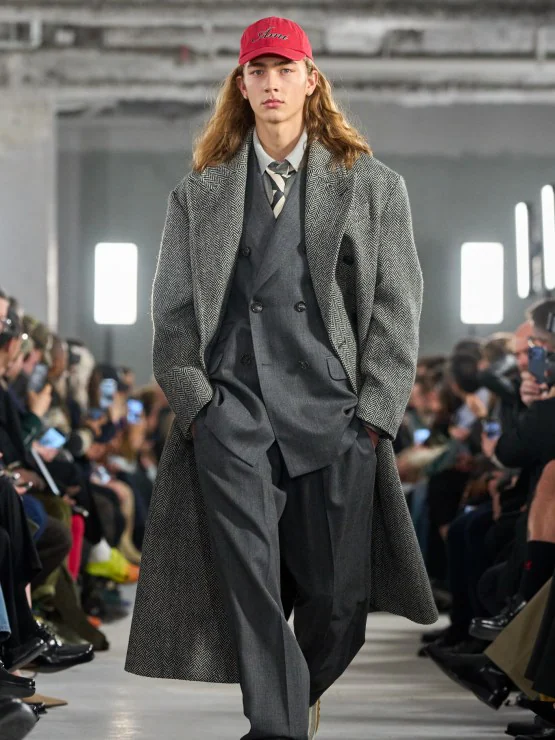
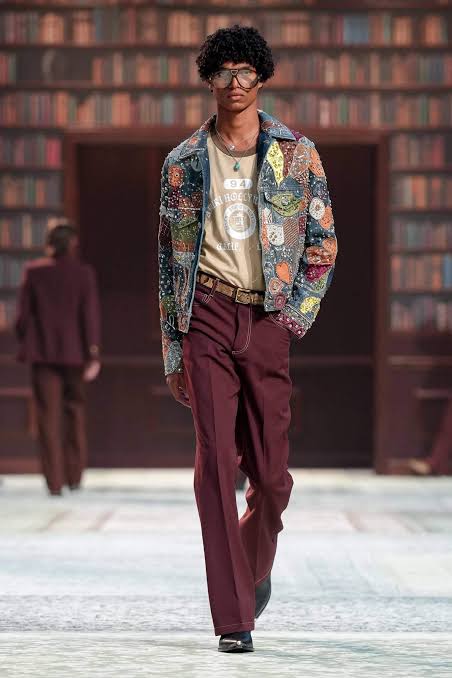
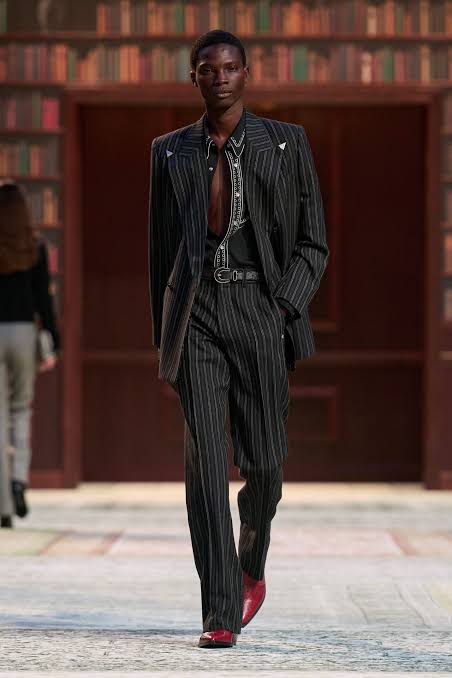
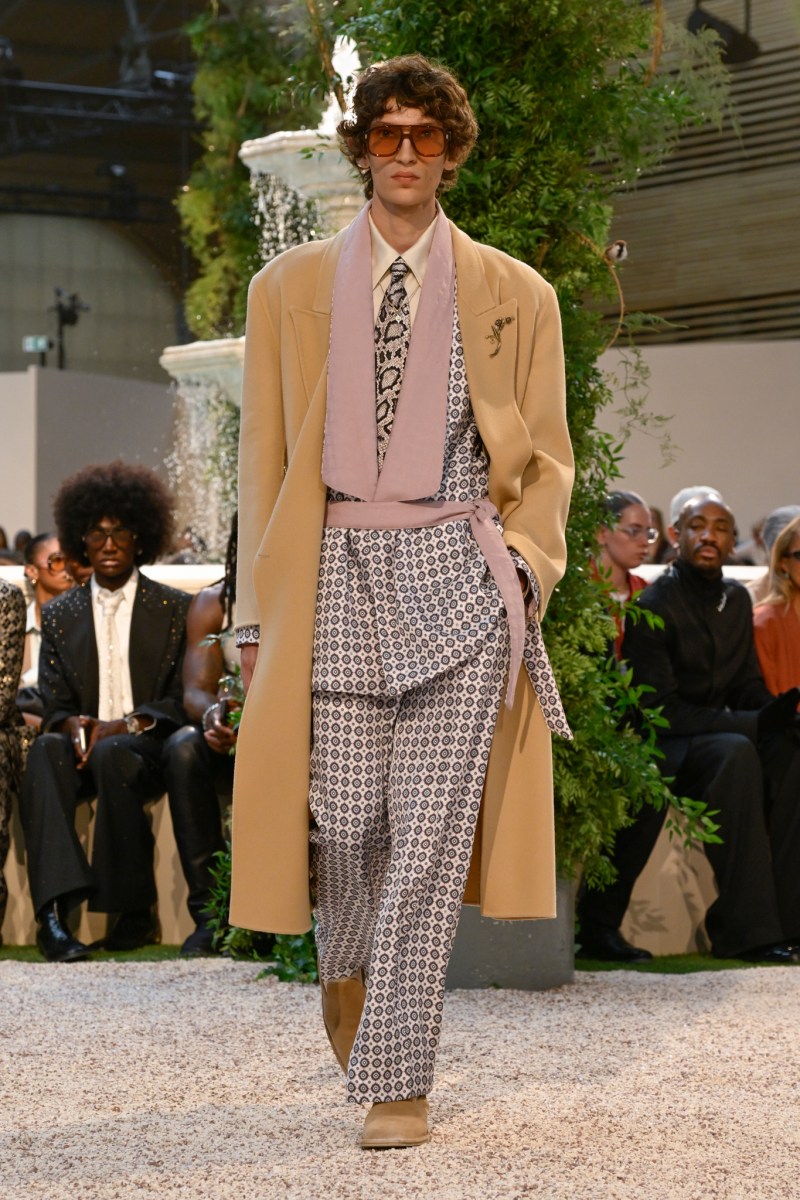
The shift has been visible on the runway for several seasons and became unmistakable in June 2026, when Mike Amiri opened his Spring 2027 show with a gunmetal suit and a mood board built around American Gigolo and the Armani wardrobe that film made famous. Draped jackets gave way to precise shoulders. Trousers came high-waisted and creased to lengthen the leg. There was iridescent Lurex-woven linen, houndstooth wool under a skin of transparent sequins, and a first fine jewelry collection made with Spinelli Kilcollin. The distressing did not disappear. It stopped being the argument.
Then / Now
Hand-shredded denim as the headline
Denim as one pillar of four
Rock imagery: bandanas, skeletons, studs
Cinematic Los Angeles: hotels, night drives, the Hughes-era high school
Menswear, sold largely through wholesale
Coed collections, global directly operated retail
Sneakers as the accessible entry
Bags and fine jewelry as the growth categories
A Los Angeles label showing in Paris
A Paris-schedule house with a Milan European headquarters
Where it came from
Mike Amiri grew up in Los Angeles, the son of Iranian immigrants who arrived before he was born, and went to Beverly Hills High. He started by making stage clothes for musicians in California, one-off pieces built for people who needed to be looked at from a distance under lights. The first capsule collection grew out of that practice, and the label formally began in 2014.
That origin explains more about the clothes than any trend cycle does. Garments made for a stage are made to be seen, and Amiri has never quite abandoned the instinct: even the sober tailoring carries some element designed to catch light. When his parents attended their first Paris show in June 2026, sitting front row alongside Maluma and Octavia Spencer, the through-line from custom stagewear to a Paris runway had taken twelve years.
Paris shows began in 2018. The following year Renzo Rosso's OTB group took a minority stake, which supplied the industrial and distribution backbone that turns a cult label into a global one. Retail followed: Shanghai and Tokyo first, then Dubai Mall's Fashion Avenue at around 3,500 square feet, and in late 2025 a first European flagship in Milan, opened in the same year the house established its European headquarters there.
The four pillars
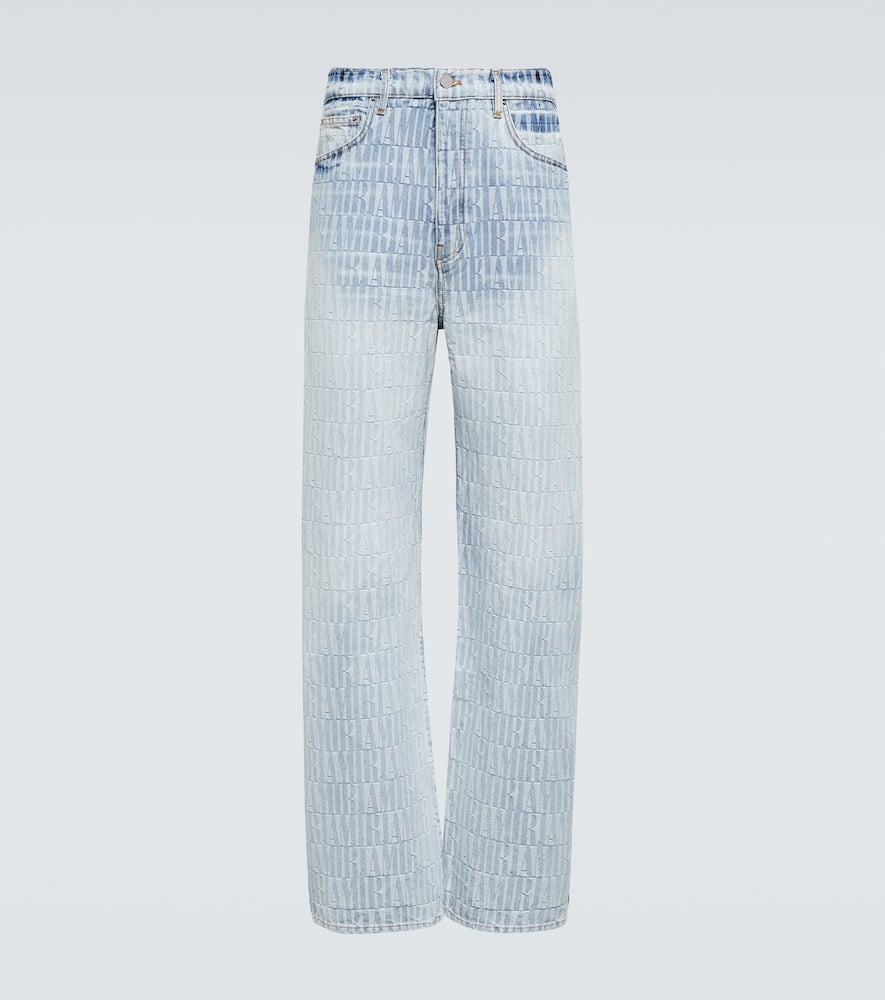
Denim
Still the foundation, still the most misunderstood part of the range. Treated properly in the section below.
Shop denim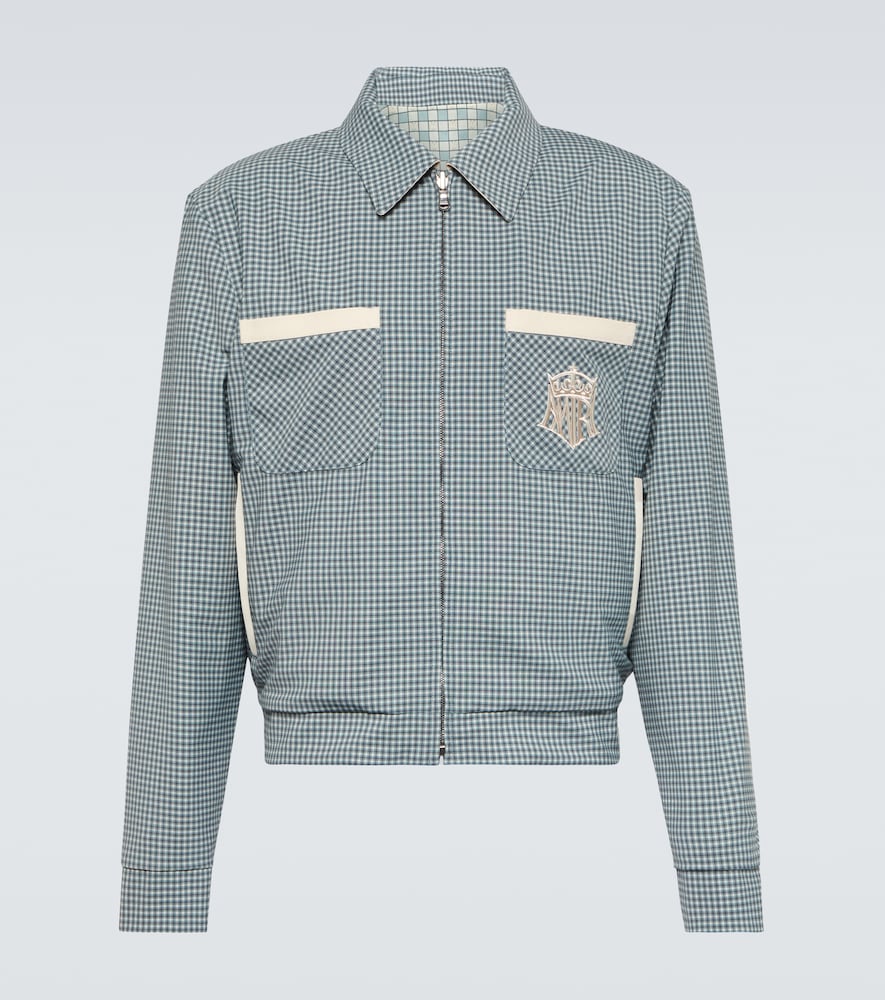
Jackets
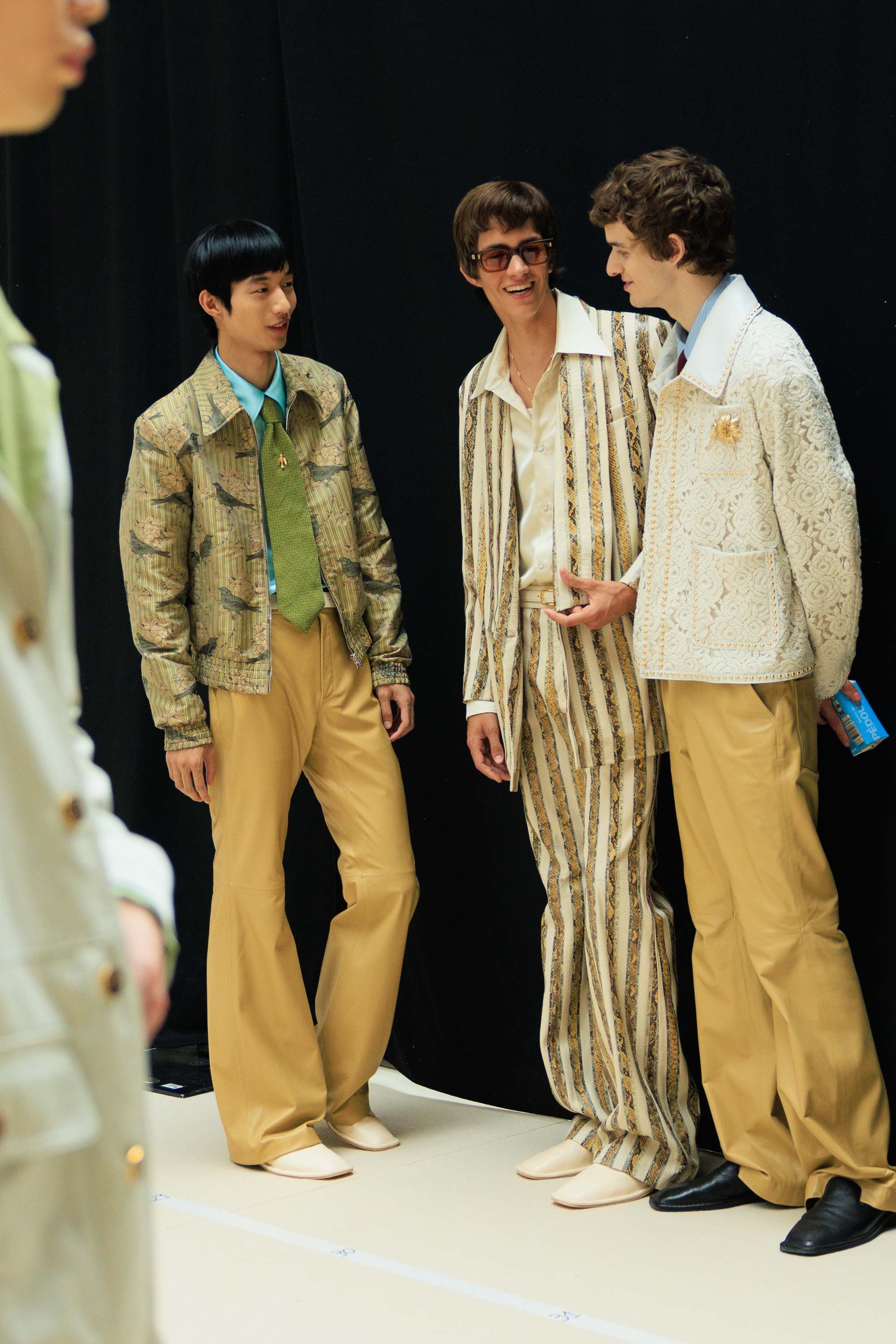
The category the house is investing in hardest and the one it is now genuinely good at. Sharper shouldering, longer lines, high-rise trousers. Cut with more ease than a Savile Row silhouette and more precision than the LA label of five years ago.
Shop jackets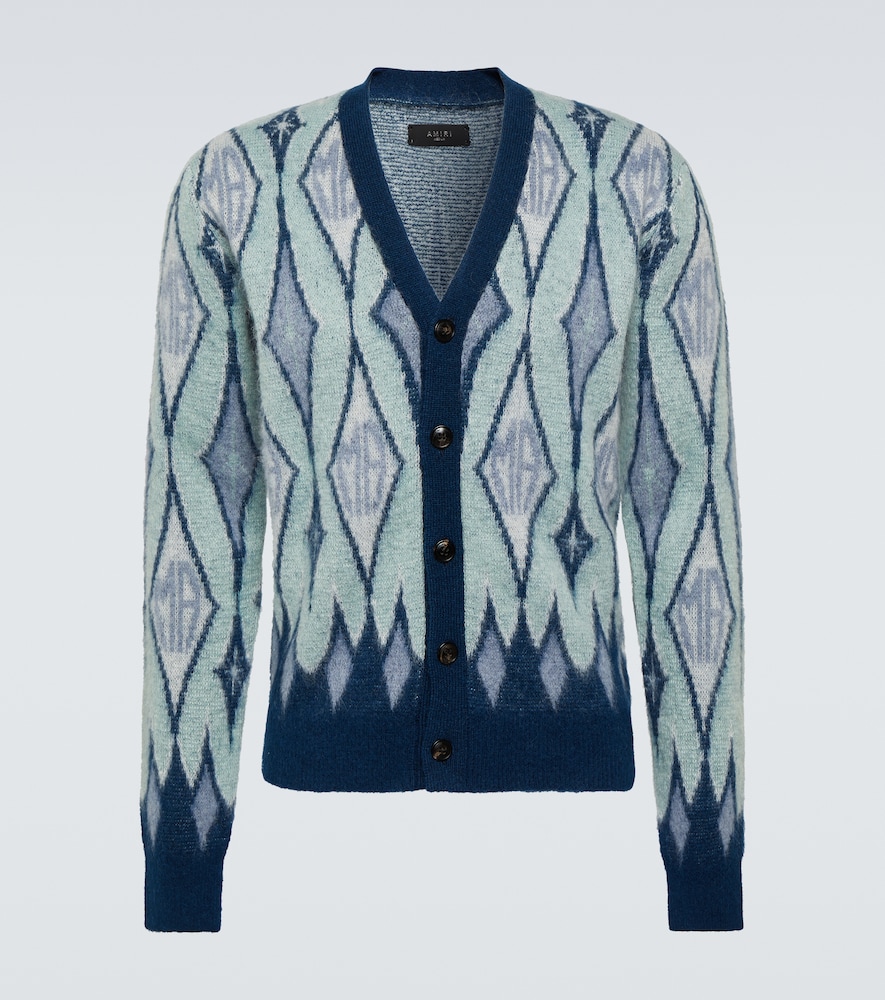
Knitwear
Shop knitwear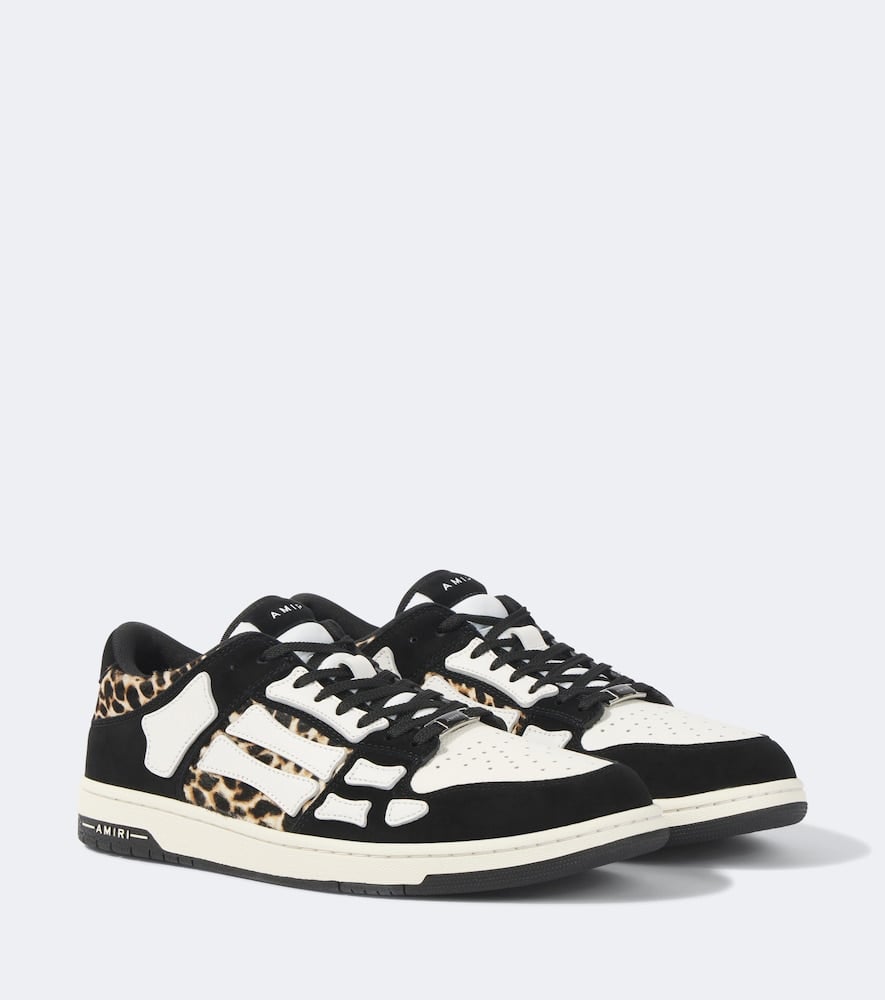
Footwear
Low tops, court silhouettes and skate-derived shapes, plus the slip-ons that carried the brand's first wave. The volume driver and the way most people enter the house.
Shop footwearThe studio · Amiri, men
Four pieces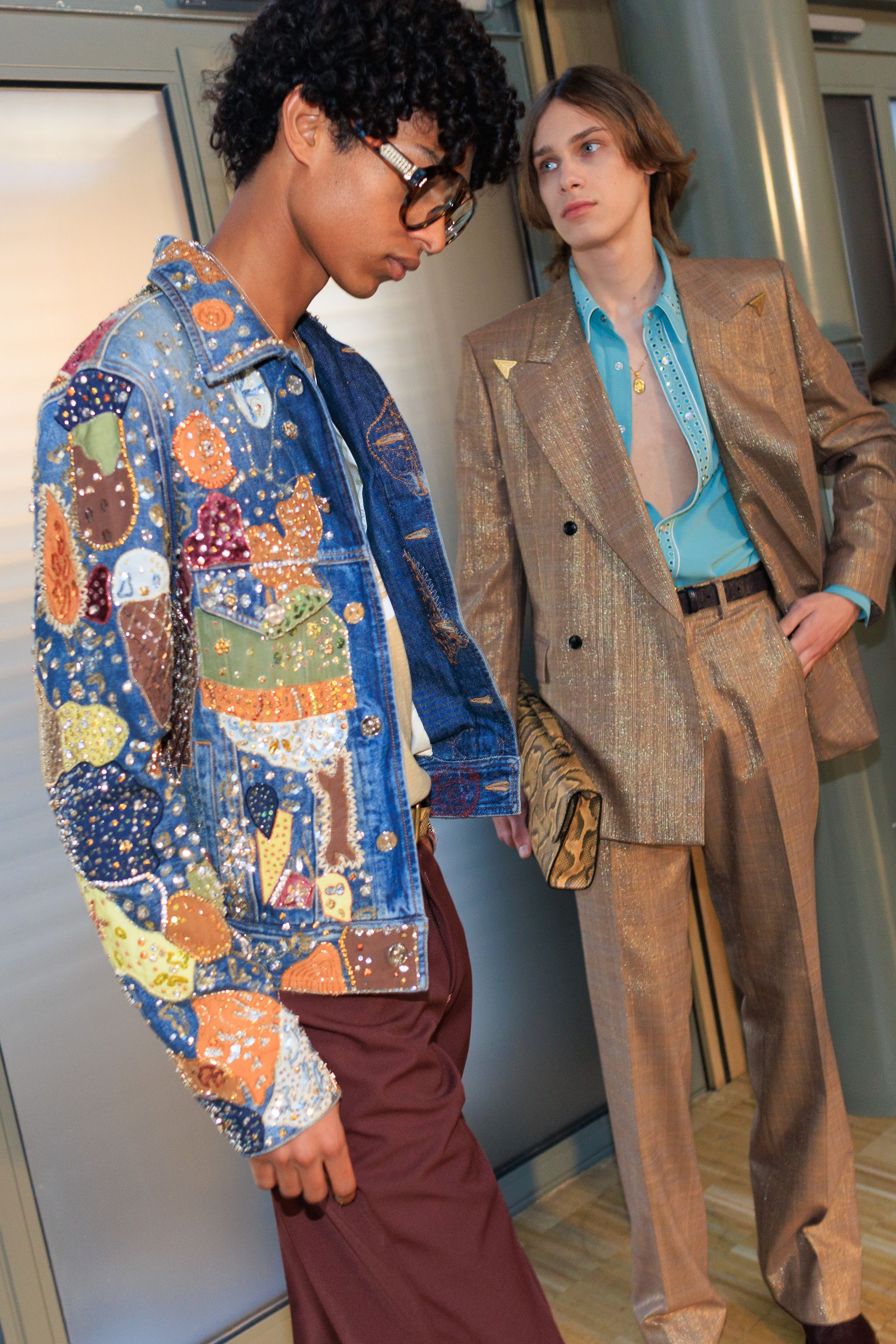
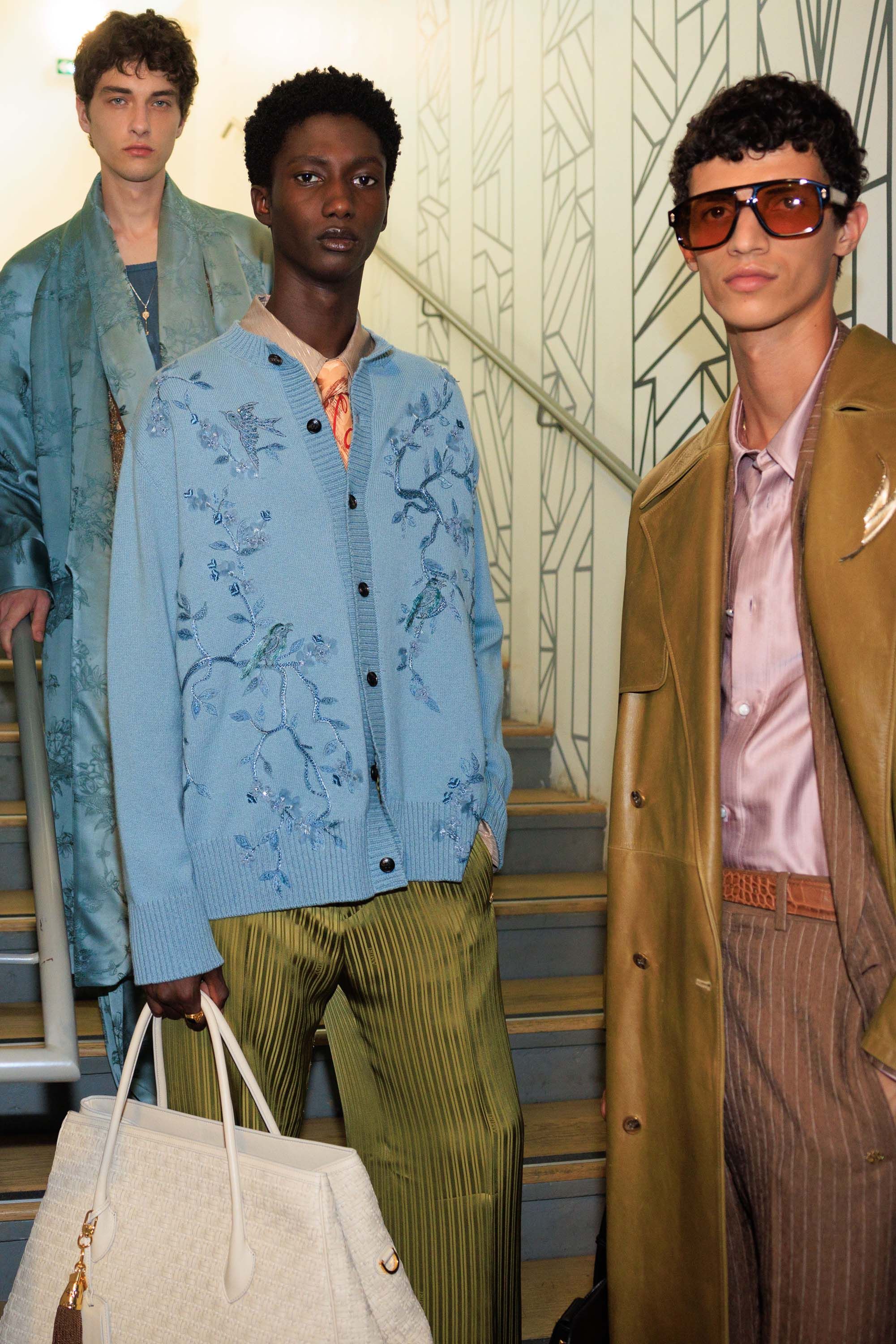
Images courtesy of Amiri · backstage photography Acielle / Style du Monde for Vogue
Understanding the denim, and the price
This is the question people actually arrive with, and no guide answers it. Two pairs of Amiri jeans can differ in price by a multiple of three, and the reason is not branding.
Tier one: production denim
Standard washes, machine finishing, the logo and the hardware doing the identification. This is the accessible end of the range and the tier most likely to appear in markdowns.
Tier two: hand-finished
Distressing applied by hand, repairs and patches placed individually, leather trims. No two pairs come out identical, which is the point and also the reason the labor cost sits where it does.
Tier three: one-off and artisanal
Heavily worked pieces, painted or embroidered panels, extensive hand construction. Effectively made in ones and twos.
Which tier you are looking at is rarely stated on the product page. Read the description for the words hand-distressed, hand-painted, hand-repaired or artisanal, and check the composition and country of manufacture. If none of those words appear, you are almost certainly in tier one, and you should be paying tier-one money for it.
What to know before you buy
- Sizing runs closer than the silhouette suggests. Denim in particular is cut leaner than the current market. Outerwear and tailoring are more forgiving. If you are between sizes in jeans, take the larger.
- Distressing is intentional and non-uniform. Fraying, repairs and rips are placed by hand on the upper tiers and will not match the product photograph exactly. That is the category working as designed, not a fault.
- Markdown behavior is aggressive. More so than most houses at this level. The same piece can sit at full price at one boutique and heavily reduced at another within the same week.
- Sneaker sizing skews large. Most of the silhouettes run roomy. Half a size down is the common correction.
- Regional pricing varies unusually widely. Amiri is stocked across a very large wholesale footprint in a lot of markets, and the resulting spread is among the widest in this price band.
The price spread, and why it matters more here than elsewhere
Some houses hold their pricing tightly across every market. Amiri does not, and the reason is structural: a broad wholesale network, aggressive seasonal markdown, and currency and duty differences across a genuinely global stockist base. The practical effect is that the piece you are looking at right now almost certainly exists at a different number somewhere else, and often by a margin worth caring about.
Nowhere is this truer than in denim and footwear, the two categories with the deepest stockist coverage. A widely carried pair of jeans can sit at full price in one market while another has already moved it to markdown, and there is no way to see that from a single boutique's site.
AN-EDITORIAL matches every piece to the same piece at every boutique that carries it and shows you all of it at once, live, with the lowest price marked. For a brand with this much variance, that is the difference between buying well and buying first.
Amiri pieces to explore
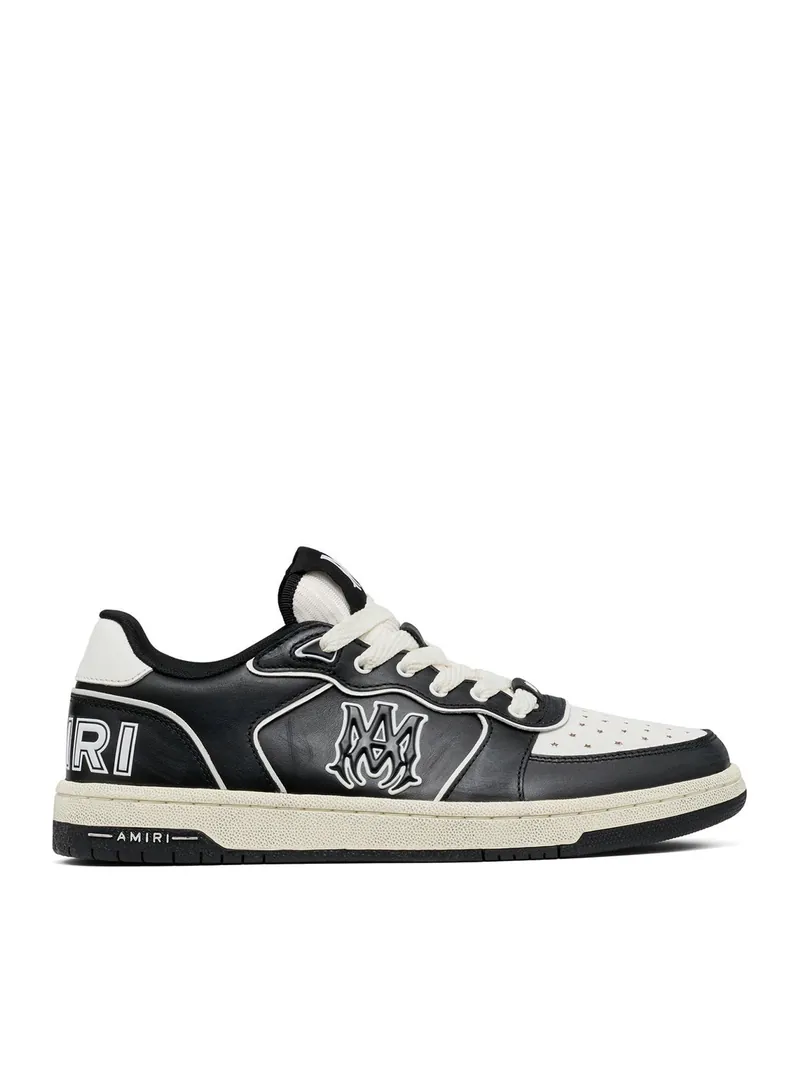
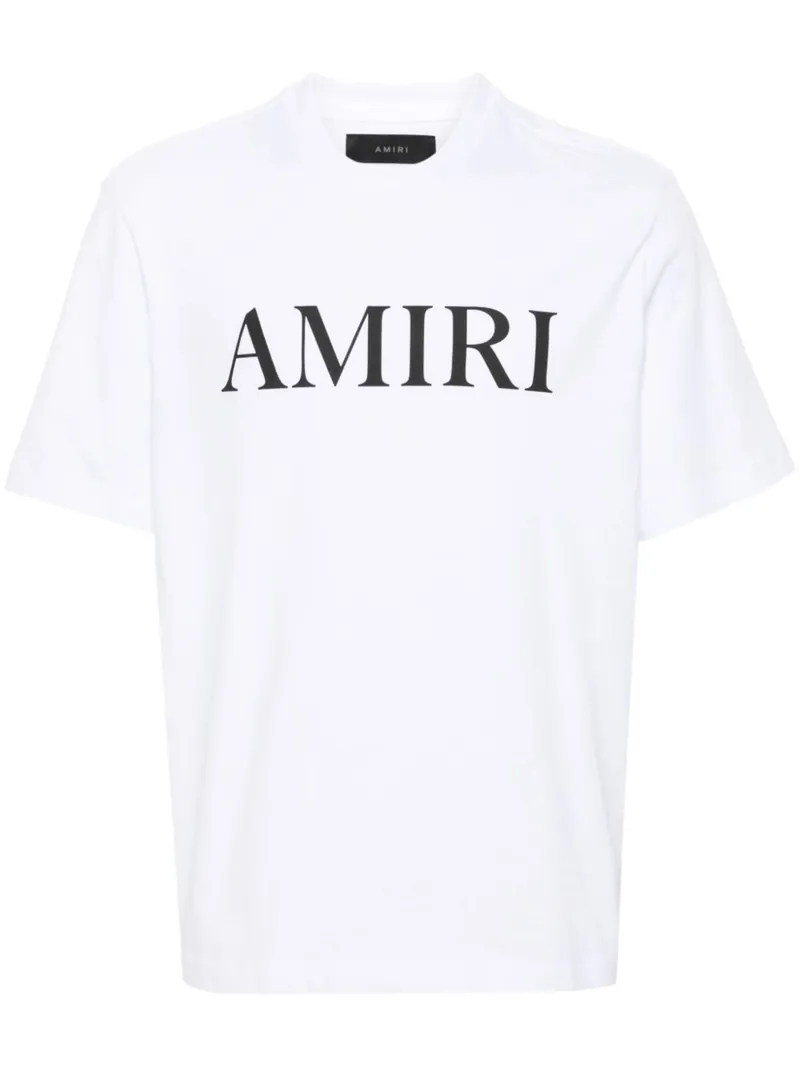
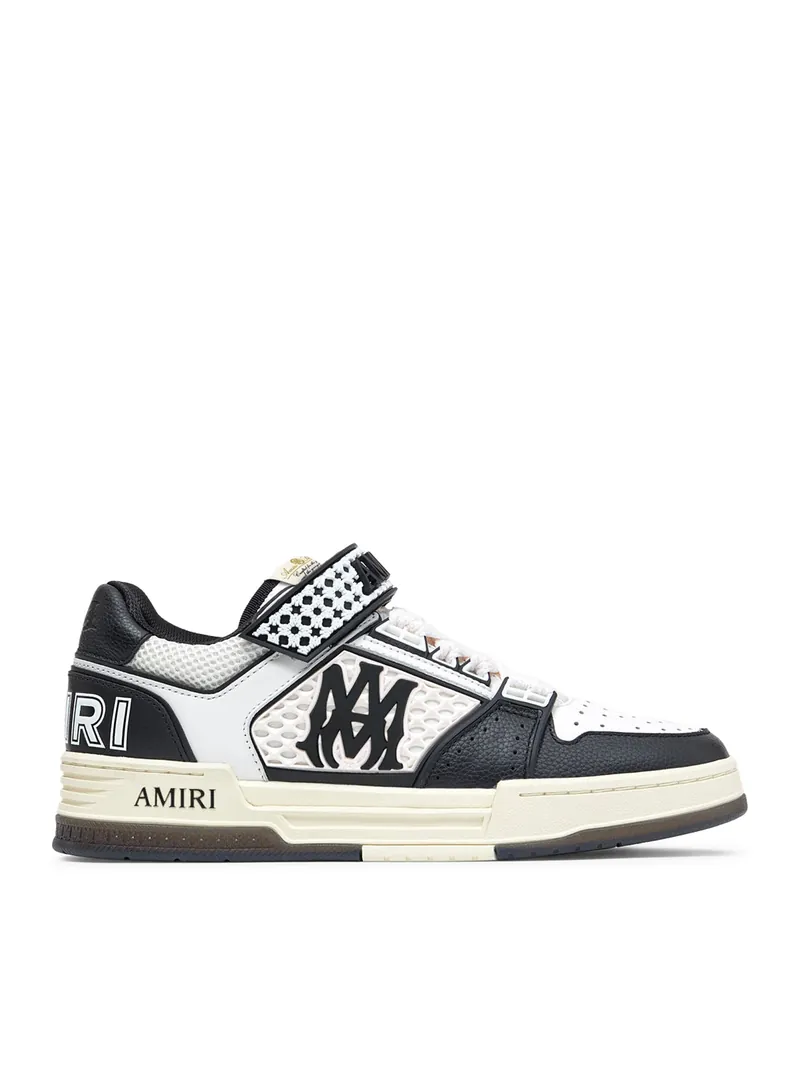
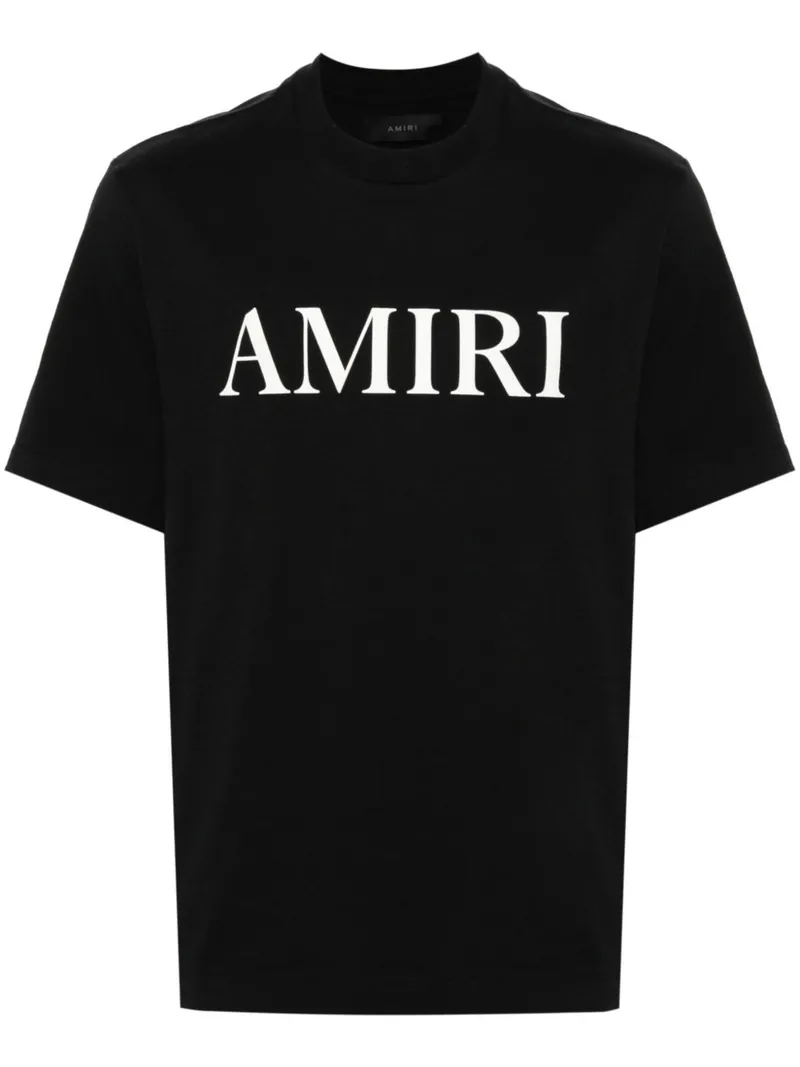
Browse Amiri for men, or open the Best Price edit and start from the widest spreads.
Frequently asked
Who designs Amiri?
Mike Amiri, who founded the label in 2014 and holds the roles of creative director and chief executive. He has designed every collection since the beginning, which is rare at this level and is part of why the house reads as coherent across a wide product range.
Is Amiri owned by a larger group?
Partially. OTB, the Italian group founded by Renzo Rosso whose portfolio includes Diesel, Maison Margiela, Marni and Jil Sander, took a minority stake in 2019. Mike Amiri retains control of the company and its creative direction.
Why are Amiri jeans so expensive?
Because the upper tiers are finished by hand. Distressing, repairs, patching and painting are applied individually rather than by machine, which means labor rather than materials drives the number. Production-tier denim without hand finishing costs considerably less, and telling the tiers apart before you buy is worth doing.
Does Amiri run true to size?
Denim runs lean; size up if you are between sizes. Sneakers run large; most people take half a size down. Tailoring and outerwear are cut with intentional ease and are closest to true to size.
Is Amiri still a streetwear brand?
Less so each season. The house has moved decisively toward tailoring, leather goods and jewelry, and the Spring 2027 collection was built around relaxed American tailoring rather than around denim. The streetwear pieces remain in the range; they are no longer the center of it.
We may earn a commission from partner links.